
Sight and Sound’s ‘A Great Awakening’ Opens
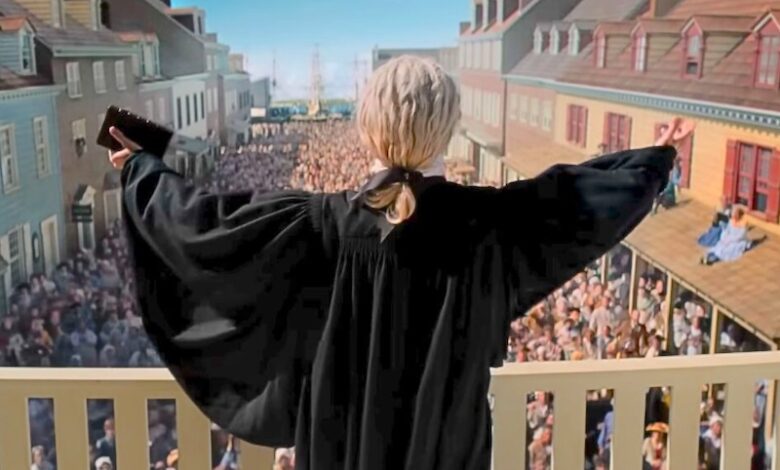
A new feature film from Sight and Sound is set to hit theaters April 3, aiming to tie America’s 250th anniversary. “A Great Awakening” will explore the religious revival that helped shape the country’s early identity and spotlight an unlikely partnership between evangelist George Whitefield and statesman Benjamin Franklin.
The film, says CEO Joshua Enck, centers on the relationship between Whitefield, one of the most prominent preachers of the 18th-century revival, and Franklin, a printer and political figure often described as a deist. Its release comes as cultural and political debates continue over the role of faith in the nation’s founding, giving the project added relevance beyond its historical focus.
What this film really depicts is the biblical definition of liberty
“What this film really depicts is the biblical definition of liberty,” Enck said in comments to media, pointing to the Liberty Bell inscription: “Proclaim liberty throughout all the land.”
According to Enck, the story emerged during research into the nation’s founding era rather than from a long held plan to produce a historical film. What stood out, he said, was how Whitefield’s preaching and Franklin’s publishing reach worked together.
Whitefield traveled extensively across the American colonies, preaching to large crowds during the revival period known as the Great Awakening. Franklin, leveraging his printing press, distributed Whitefield’s sermons widely, a partnership Enck described as instrumental in spreading the movement’s influence.
“They were a team,” Enck said. “When you combined the power of his voice with Franklin’s ability to get the word out, it unified the colonies.”
A Great Awakening looks at imperfect leaders
The film avoids presenting its central figures as idealized heroes. Instead, it emphasizes their personal flaws and spiritual struggles, framing the revival as a movement shaped by imperfect leaders.
The historical awakening itself unfolded amid denominational tensions and colonial divisions, conditions Enck suggested mirror aspects of modern American life. Still, he said the film is not intended as a political statement.
“We’re not trying to prove whether every founding father was a Christian,” he said. “We’re simply telling how this powerful friendship ignited an awakening.”
–Alan Goforth