
How an Interim Pastor Guides a Church Through Transition
They can bring stability, address challenges and prepare congregations for new leadership
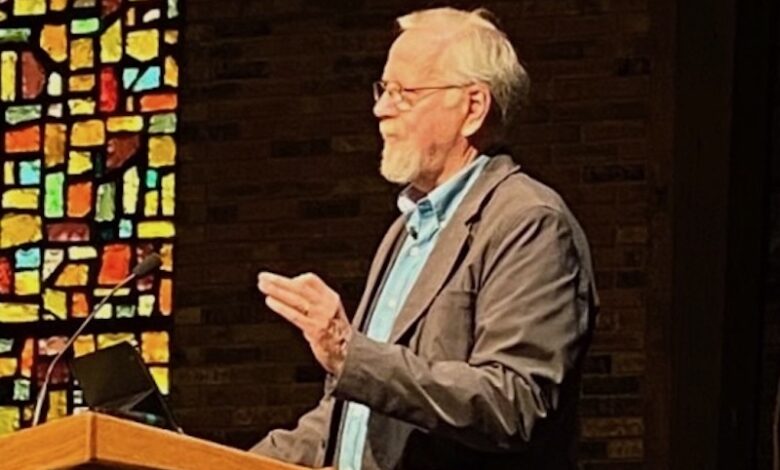
When Pastor Bob Evans first stepped into Westbrooke Church, he wasn’t there to take over. He knew his role was temporary. As an interim pastor, his goal was to guide the Overland Park congregation through a transition and prepare it for the permanent leader who would follow.
This process of finding a new pastor isn’t unique. Lifeway Research found that 56% of protestant churches did not have their current pastor 10 years previously. When the time comes, many churches immediately begin searching for the next pastor after one leaves. But bringing on an interim pastor slows down the pace, allowing ample time for the church to evaluate its health, address unresolved issues, and thoughtfully plan for its next chapter.
A New Role after Retirement
Evans’ work in ministry began over 50 years ago, first as an assistant pastor in 1975, then a lead pastor five years later. Since then, he has pastored four different churches across three states. In 1995, he and his wife moved to Brainerd, Minn., where they still live today.
 Evans retired from full-time pastoring in 2017. The following year, he got involved with Interim Pastor Ministries (IPM).
“I remember one guy in particular who had been a sort of mentor figure in my early pastoral days,” Evans recalls. “I noticed that he was changing locations every year or year and a half or so. And I dug into it and found out that he was working as an interim pastor.”
Learning about that role inspired the retired pastor, and he felt God calling him to the position. “I loved the idea [that there] still might be a continuing purpose for me and a way that I can be helpful to churches, even in my post-retirement years. And that was exciting to me.”
From First Steps to the Next Pastor
Westbrooke is now the sixth church Evans has served since he received training through IPM. Through his previous experience, he has gained valuable knowledge about leading a church through a transition, both relational and organizational.
An interim pastor typically stays with a church for around 12-18 months, but the length varies depending on the church’s needs. Evans shares that his shortest placement was around nine months, and his longest was 22 months.
Each pastor generally follows the same five-stage process: connection, evaluation, addressing needs, strategic planning, and pastor search.
The connection stage focuses on developing relationships with the congregation through conversations and listening to individual concerns.
The connection stage focuses on developing relationships with the congregation through conversations and listening to individual concerns. In Evans’ time at Westbrooke so far, he has spent over 120 hours doing one-on-one “listening interviews.”
For stage two, IPM provides what they call a “Ministry Insight Tool,” a survey sent out to the congregation about the church’s health in many different areas. The interim pastor, along with a team of volunteers, then uses the results to guide his next steps.
“We have lots of information about where the church is,” Evans explains. “What the concerns are, what we’re really doing well, where the deep wells of strength and resilience are found within the church, what are some of the issues that we can actually fix during a relatively short period of time.”
After the strengths and weaknesses are assessed, the interim pastor begins to implement changes. This stage looks very different depending on the individual needs of the church.
Evans says stage four, strategic planning, is very important. “The church asks and answers questions through the transition team,” he says. “What are our core beliefs? What are our core values? What is our mission? What is the unique purpose that God has given us?”
Once those questions are answered, the interim pastor and other church leaders will come up with a clear strategy with short- and long-term goals.
Finally, an interim pastor begins to phase out his leadership as the church enters stage five, searching for the next full-time pastor.
“When we get to that phase,” Evans says, “the interim pastor begins to shift his role and becomes more of a coach in that process rather than a leader.”
A Different Kind of Interim
While interim pastors from IPM take on a more involved role in evaluating needs and implementing changes, others primarily serve to “supply the pulpit” and bring stability during a pastoral transition.
Howard Cordell, Executive Director of Midwest Ministers Fellowship based in Blue Springs, Mo., works with these types of interim pastors.
“We have a board of 13 guys who are all pastors,” Cordell says. “These guys are pastors that love the church, that have enough experience to know the pain of what it is to go through change.”
The pastors involved with the fellowship can serve a few different roles in the churches they are sent to. Often they are there just to fill the Sunday morning preaching role, but other times they help with the search for a new pastor.
Midwest Ministers Fellowship is connected with over 200 churches across Missouri and Kansas
Midwest Ministers Fellowship is connected with over 200 churches across Missouri and Kansas, ranging in size and denomination. Cordell shares that churches of all kinds have taken on interim pastors, but that there are certain factors that make it more likely.
“It depends on the history and the culture of your church,” he says. “Some churches have a congregational vote, which would require finding more than one candidate.”
Size also plays a role. “A larger church, because they’re pretty well-situated, probably isn’t gonna be in that big of a hurry. So they’re gonna slow down the process a little bit…a smaller church probably needs somebody pretty fast.”
Cordell believes that not every church would benefit from an interim pastor. Churches with a large staff and congregation, he says, may rely on their own church members to fill the pulpit during a transition period.
Although the interim pastors from Midwest Ministers Fellowship look a little different, they share similar goals to those of Evans.
Challenges and Success
When an interim pastor from IPM works with a new church, there are often challenges to overcome. These can range from structural and organizational problems to issues within the congregation.
Evans describes the biggest challenges he has faced. “Dysfunctional systems and relationships and people, historical trauma in congregations, overcoming division and mistrust, all of those kinds of things.”
In the end, Evans defines a successful interim pastor placement as a congregation flourishing under the pastor who has been called to the church. He shares that he keeps up with his previous churches on social media and loves to see their leaders still thriving.
No matter where Evans is serving, his ultimate goal as an interim pastor is to help them “focus and utilize their energies efficiently in pursuit of the mission and the purpose that God has called them to.”
–Lyra Thompson | Metro Voice
#InterimPastor #PastoralTransition #ChurchLeadership #PastorSearch #ChristianLeadership #ChurchMinistry #MinistryLeadership