
Christian Expression Returns to Public Schools
How faith left the classroom and began making a comeback
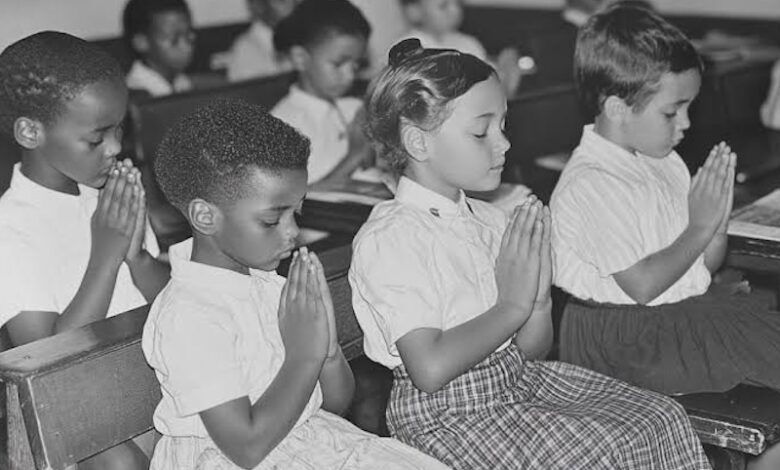
Seventy years ago, public school students could leave school for an hour to attend church. Now, that is unheard of. The relationship between schools and churches has gone through many evolutions, from church-run education to separation of church and state. In recent years, however, renewed efforts to bring religious education back into public education have emerged.
SPECIAL REPORT: By Lyra Thompson
Early History
In the early days of the United States, religion—especially Christianity—was woven into many aspects of American life. That included education.
Education in the pre-Revolutionary colonies often incorporated the Bible and biblical principles. The New England Primer, for example—considered one of the most successful 17th-century textbooks—contained ideals from the Puritans and the King James Bible.
When the Founding Fathers wrote the Constitution, religion was still deeply valued. Though there was some debate surrounding how large a role Christianity would play in government and education, religious freedom was nonetheless emphasized in the document.
Dr. Julie Bryant, professor and head of the Education Division at Southwest Baptist University, sees education and religion as more closely connected than people may think.
“Our founding fathers established that our country was one nation under God,” Bryant says. “It’s not taken away from the school setting. It was used for instruction, and that instruction was to teach doctrinal truth, Bible verses, and catechisms.”
For generations, religious teachings maintained a presence in American schooling. The strict separation between education and religion today did not exist in the same way.
Mid-Century Church Integration
The turn of the 20th century saw the introduction of a program called released time, which allowed students to leave school to attend religious education. The concept was first discussed in 1905 but wasn’t implemented until 1914 in a school district in Gary, Indiana.
Over the next few decades, the number of students involved in released time programs grew rapidly. By its peak in 1947, 2 million students participated.
Kansas City resident David Cobb recalls a similar program called Weekday Church School. In a prior interview with Metro Voice, Cobb shared that something like what he remembers would be unthinkable today.
“It’s been a couple of generations from the church working with public schools to now where it seems like public school is almost the enemy of the church,” he said.
Cobb’s assertion is not without basis. In the late ’40s and ’50s, a series of court cases challenged the legality of released time programs. Some argued that it was coercive for those who chose not to participate or that it violated the separation of church and state.
These legal battles set the stage for the eventual shift away from religious inclusion in public schools.
The Shift Toward Separation
A major turning point in the relationship between religion and public schools came in the 1960s. Bryant attributes this change to the general cultural shift of the time.
“You watch [old black-and-white] shows, and you still hear about going to church and the value of the family,” she says. “In the ‘60s, when there was unrest and war and people rising up and saying that they want to be who they are—free expression—we started being more accepting of things that weren’t biblically sound.”
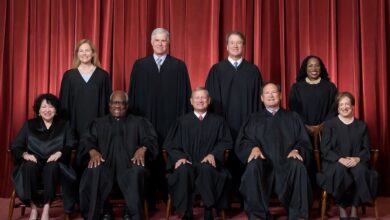
Whether it was a reflection of culture or not, a few notable court cases arose in the 1960s. One ended school-sponsored prayer, and another stopped mandatory Bible reading. In both cases, the mandates were seen as unconstitutional.
Later decisions include a 1987 ruling that prevented teachers from giving equal instructional time to evolution and creationism, arguing that it advanced religion rather than scientific understanding.
There is much debate, even among Christians, about the validity of these rulings. Some Christians agree that ending mandated prayer protects students from the pressure to participate in a religion they don’t believe in. Others, like Bryant, view them as a step too far.
“All it takes is someone getting loud and feeling that their toes are being stepped on, and the Supreme Court backing that decision,” she says.
Religion Reemerging
In recent years, however, the hard line that had been created between public education and faith seems to be dissolving.
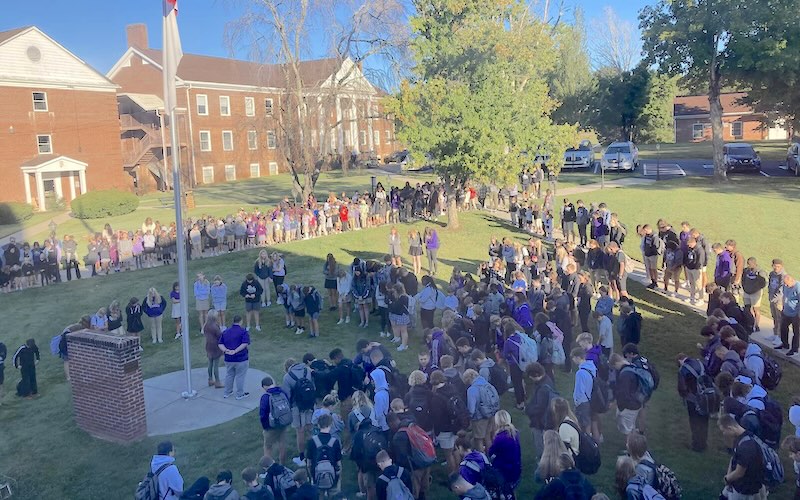
Students still have many religious freedoms in the school setting. They can bring their Bibles to school. They can create Christian clubs. They can openly talk about their beliefs with peers.
There have been several court cases within the last five years that have brought religious expression back into the educational setting. Several states, including Texas and Louisiana, are legalizing—or even mandating—the posting of the Ten Commandments on classroom walls.
Other laws are giving parents more freedom over what their child learns. One gave parents in some states the right to excuse their kids from school for “religious learning time.” Another allowed parents to opt students out of classes with LGBT+ materials.
Decisions like these are shrouded in controversy. Some view them as progress, while others see them as overstepping.
And the issue is far from over. Ongoing debates still abound regarding what role religion—specifically Christianity, in many cases—should play in public schools. But for education professors like Bryant, where things are headed is encouraging.
“There’s hope. It does make me happy,” Bryant says. “I really want [my students] to know that they have a lot of freedoms that are protected, and they can be a Christian and be salt and light in the public school setting.”
#ReligiousFreedom #PublicSchools #ChristianEducation #FirstAmendment