
In Final Film, David Attenborough Looks at the Oceans
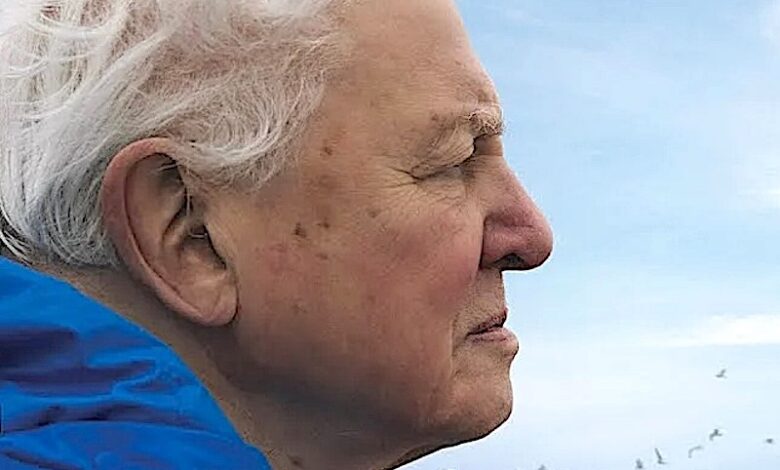
When Sir David Attenborough looks into the camera for what he’s described as his last documentary, he doesn’t mince words. “We are draining the life from our ocean,” he says bluntly. “Today it is in such poor health, I would find it hard not to lose hope.”
But hope, for the 98-year-old veteran biologist, filmmaker and writer, is never far behind. “The ocean can recover faster than we had ever imagined. It can bounce back to life.”
His upcoming Disney+ documentary, set to release on his 99th birthday May 8, could spotlight a stark environmental reality: five Asian countries are responsible for at least 80% of the world’s ocean plastic pollution. While the United States contributes a mere 0.02% of ocean plastic waste, nations like China, India, and the Philippines are flooding marine ecosystems with millions of metric tons of plastic debris annually.
“I suppose, for me, the thing that is so galling about plastic pollution is that it is so utterly unnecessary,” Attenborough told BBC Earth. “The plastic in our oceans ought not to be there.”
The documentary promises to be more than just a litany of environmental despair. “After living for nearly a hundred years on this planet,” Attenborough reflects, “I now understand that the most important place on Earth is not on land, but at sea.”
It was that assessment that led President Trump on December 18, 2020, to sign the Save Our Seas 2.0 Act, which was a more comprehensive version of the original legislation. The act established a nongovernmental Marine Debris Foundation and created a monetary prize competition to find solutions to the problem.
During the 2016 campaign, Trump had promised, “As President, I will continue to do everything I can to stop other nations from making our oceans into their landfills.”
There’s no word if the documentary will exclude the efforts of the United States to pressure countries to change, but regardless, it continues to be an area where the U.S. continues to lead.
With characteristic optimism, though, Attenborough argues that targeted interventions in these five countries could dramatically reverse global ocean pollution. “We are at a unique stage in our history,” he says. “The future of the natural world, on which we all depend, is in our hands.”
As his remarkable career approaches its sunset, Attenborough’s message remains clear: we can save the oceans, but we must act now.
The only question is, will the documentary, and the world, step up to force those five countries to act swiftly?
–Dwight Widaman | Metro Voice with assistant from Luke, our AI researcher.