


U.S. freight markets are showing signs of a shift toward domestically driven industrial activity, with truck freight volumes rising sharply in the Midwest.
Truckload volumes from Kansas City to Cincinnati and Chicago to Detroit are up an impressive 8 percent year over year, driven by increased activity in traditional industrial corridors tied to autos and heavy machinery, FreightWaves founder and CEO Craig Fuller said in a Feb. 9 video.
By contrast, volumes tied to imports have declined, with activity in Southern California’s Inland Empire down roughly 17 percent.
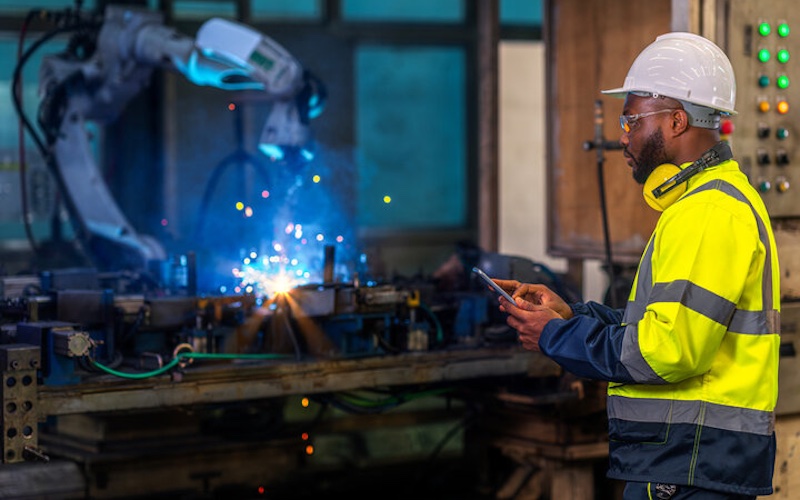 Describing the 8 percent annual jump in truckload volumes as a “significant” development, Fuller noted that import hubs were largely absent from the rally, with freight growth concentrated instead in domestic industrial corridors. The news underscores the Trump adminsitration’s push for domestically-produced products which is closely tied to American wages and job growth.
The news contradicts media doomsayers. “It’s not what you would expect it to be,” he said.
“Imports are actually not really participating in this volume surge. It’s happening in the Rust Belt, the traditional industrial Midwest, which is really focused on auto and heavy machinery, is where we’re seeing it. We’re not seeing it at the ports.”
The divergence marks a break from the import-led freight cycles that have dominated much of the past decade, including during the pandemic-era surge in goods demand.
Fuller said the current pattern suggests domestic supply chains are becoming more active, with freight growth concentrated in the middle and last mile rather than in containerized imports.
“They’re gaining significant market share, and that tells me that this particular rally is all about the re-industrialization that Donald Trump’s policies have been trying to pursue.”
President Donald Trump has been pursuing policies, including tariffs, that seek to re-shore supply chains and revive America’s depleted industrial base.
Research shows that freight measures have historically led U.S. growth cycles by several months; some studies estimate around six months, while others suggest it’s closer to four. That could foretell that the US will be experiencing a historic economic boon by May or June.
Factory Surveys Support Freight Signals
Recent manufacturing surveys broadly align with the freight data. The Institute for Supply Management’s manufacturing index returned to expansion territory in January, rising to 52.6 from 47.9, while S&P Global’s U.S. manufacturing PMI climbed to 52.4, signaling the strongest pace of factory output growth since mid-2022.
S&P Global said industrial production accelerated sharply in January, even as demand remained uneven and export orders continued to fall.
Chris Williamson, the firm’s chief business economist, said manufacturers cited reduced import competition due to tariffs and expectations of improved domestic demand as factors supporting output.
Trump said in a Jan. 21 speech at the World Economic Forum Annual Meeting in Davos, Switzerland, that he expects factory construction numbers to “skyrocket” in the near future, noting that his administration has fast-tracked permits to accelerate the process.
He touted $18 trillion in pledged foreign investment in the United States, saying it is “money coming in and building things, factories.”
By Tom Ozimek