
Missouri Could Limit AI As Trump Moves Towards Federal Policy

Missouri lawmakers, weighing a bipartisan push to set strict limits on artificial intelligence, could run afoul of a federal policy expected to be singed this week by President Donald Trump.
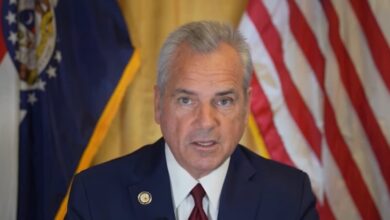
Rep. Phil Amato’s AI Non-Sentience and Responsibility Act – pre-filed Dec. 1 with backing from both House and Senate sponsors – aims to give Missouri “clear guardrails” on what the technology can and cannot do. Amato, a Republican, said the bill, shaped with help from an AI expert and legislative researchers, positions Missouri among the states moving to assert authority over AI. The proposal reads “No AI system shall be granted the status of a person,” has drawn unusual enthusiasm in the Capitol, Amato said, after circulating through legislative research offices and surfacing during caucus discussions about next session’s priorities.
While most can agree that granting AI personhood is a bad thing, others point out the risk of uninformed legislators creating policies that have implications far beyond their borders.
READ: Artificial Intelligence makes Americans fearful
Trump said on Dec. 8 that he will sign an executive order this week to establish a single federal rulebook for artificial intelligence and limit the authority of individual states, like Missouri, to regulate the fast-advancing technology, saying the move is necessary to ensure the United States continues to lead the global AI race.
“There must be only One Rulebook if we are going to continue to lead in AI,” Trump wrote in a post on Truth Social. “We are beating all countries at this point in the race, but that won’t last long if we are going to have 50 States, many of them bad actors, involved in rules and the approval process.”
Trump said that AI will be “destroyed in its infancy” if states wield the regulatory power to require AI companies to get separate approvals in each jurisdiction.
The upcoming order is the administration’s strongest step so far to consolidate federal power over AI governance and comes after months of pressure from leading developers and investors, including OpenAI, Google, Meta, and venture capital firm Andreessen Horowitz, to replace what they describe as a patchwork of state laws with uniform national standards.
The companies have warned that China may pull ahead of the United States on AI development if states are allowed to regulate the technology.
White House AI Strategy
The president did not release specifics, but the move aligns with steps the White House has already taken to limit the influence of state-level AI rules. The United States’ AI Action Plan, released by the federal government in July, urges federal agencies to deny AI-related funding to states with burdensome regulations while acknowledging state-level regulatory authority more generally.
“AI is far too important to smother in bureaucracy at this early stage,” the action plan states. “The Federal government should not allow AI-related Federal funding to be directed toward states with burdensome AI regulations that waste these funds, but should also not interfere with states’ rights to pass prudent laws that are not unduly restrictive to innovation.”
The plan envisions major investments in data-center infrastructure, energy generation, semiconductor manufacturing, federal AI adoption, and export-oriented AI diplomacy, while also seeking to counter Chinese influence.
The president’s push for a single national standard also reflects his broader bid to position the United States as the world’s uncontested AI leader and to counter Communist China’s rapid progress. He has also launched “Genesis Mission,” which mobilizes federal scientific data and supercomputing resources in a program he has likened to the Manhattan Project.
“In this pivotal moment, the challenges we face require a historic national effort, comparable in urgency and ambition to the Manhattan Project that was instrumental to our victory in World War II,” Trump’s Nov. 24 executive order on the Genesis Mission reads.
The initiative aims to accelerate scientific advances, bolster national security, ensure U.S. energy dominance, and improve returns on federal research investments, strengthening the United States’ technological and strategic position globally.
‘Federal Government Overreach
Trump’s announcement of a forthcoming “One Rulebook” AI order could intensify tensions between Washington and state governments that have passed laws as well as like Missouri.
By Tom Ozimek | The Epoch Times with additional reporting by Metro Voice