
United Church of Christ Equates U.S. Immigration Policies With Terrorism
Also opposes Laken Riley Act, named for murdered nursing student
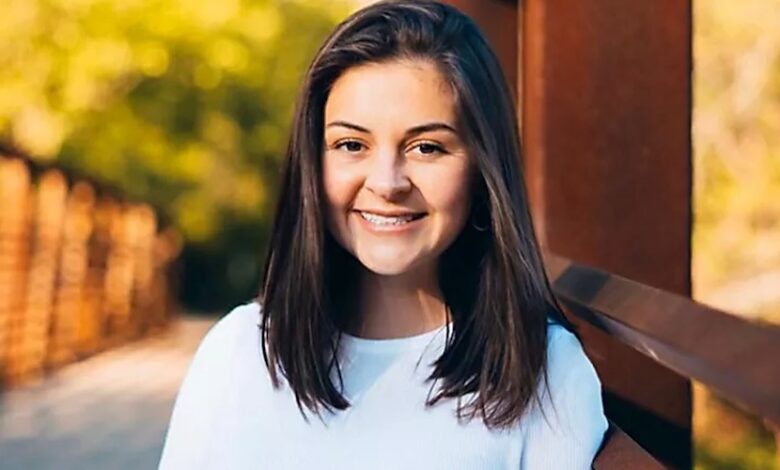
The United Church of Christ (UCC) drew national attention last week when its General Synod, meeting in Kansas City, passed a resolution branding certain U.S. Immigration and Customs Enforcement (ICE) actions as “domestic terrorism.” It also voted to oppose The Laken Riley Act, named after a murdered nursing student.
In a vote that was nearly unanimous—627 in favor, 8 against—delegates accused the Trump administration of “weaponizing the constitution” and called for divestment from private detention companies, naming CoreCivic, GEO Group, and Management and Training Corp. The catalyst: ICE raids, where agents allegedly refuse to identify themselves for fear of danger to themselves and their families.
Rev. Clara Sims, Pastor at First Congregational UCC in Albuquerque, brought the measure forward. “Our faith has always called us into spaces of risk on behalf of the vulnerable, especially when people are being made vulnerable by really corrupt systems of power,” she told reporters. UCC advocates say the move was an emergency response to ICE detentions.
“It is important for us to rededicate ourselves to protecting immigrants and refugees, also because of our call as Christians,” said Abigail Cipparone of the denomination’s Office of Public Policy and Advocacy, according to Newsweek.
But not everyone is buying the “domestic terrorism” label. Public safety organizations were joined by The White House, which quickly pushed back, calling ICE officers “heroes” and arguing that tactics like wearing masks are meant to protect agents after an 830% spike in assaults. “ICE officers are not ‘domestic terrorists,’” a spokesperson said. “They are heroes who are doing their job, protecting American communities, and enforcing the law with the utmost professionalism”.
Now, some are questioning the denomination’s support of protests in 2020. As Black Lives Matter protests swept the nation, the UCC and many of its clergy were vocal supporters. Many demonstrations were peaceful, but hundreds were not. Riots in multiple cities left more than $1 billion in property damage and dozens dead—including retired St. Louis police captain David Dorn, shot while trying to protect a friend’s store, as reported by Metro Voice. The church, notably, never used the word “terrorism” to describe the violence that erupted from those protests, though critics said the violence fit the definition of terrorism.
That’s a point critics are now latching onto. “You can’t have it both ways,” said one observer on social media. “If violence and fear are the criteria, the BLM riots fit the bill more than ICE raids ever did.”
In the same resolution, the church went so far as even voicing opposition to the January 2025 passage of the Laken Riley Act, named after a nursing student violently raped and allegedly murdered by illegal alien Jose Antonio Ibarra. He was released into the country in September 2022 during the Biden adminsitration after his apprehension by border authorities.
It’s too early to know if the UCC’s resolution will shift the conversation or further polarize the denomination from public opinion. The Laken Riley Act, for example, received bipartisan support.
The denomination has lost two-thirds of its members in the last 50 years, mirroring its decided shift to the left. Between 1987 and 2021 alone, it lost 52% of its members.
What’s certain is that the church’s resolution, while cheered by some, has opened up a new debate over how—and when—faith leaders choose their words and what actions determine terrorism.
–Dwight Widaman