
Is Romance Dead? A Valentine’s Day Response
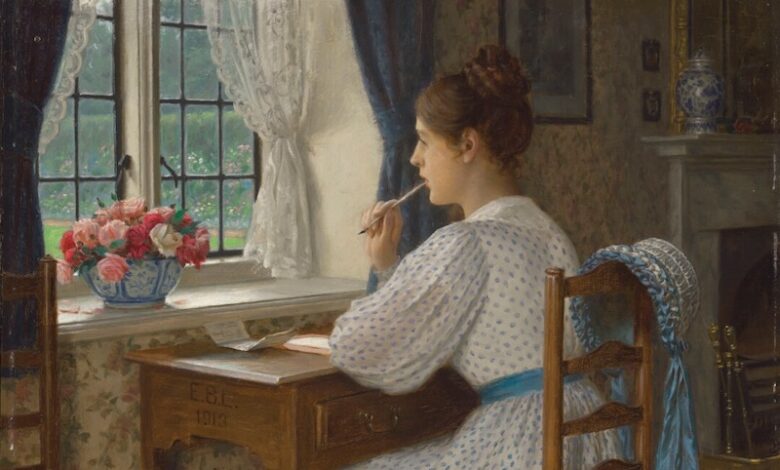
The oldest surviving Valentine’s Day letter in English dates from February 1477, when Margery Brews addressed her betrothed, John Paston, as her “right well-beloved Valentine.” She wrote to her fiancé because her father, who disapproved of her upcoming marriage, refused to provide what John’s family considered an appropriate dowry. In her letter, Margery nobly offered her understanding should Paston choose to withdraw his affections.
Fortunately for these lovers, Margery’s mother, Elizabeth, stepped into the dispute and played the diplomat in the family. In her letter to Paston, she wrote: “On Friday it is Saint Valentine’s Day, and every bird chooses itself a mate. And if you would like to come on Thursday night … I trust God that you will speak to my husband, and I will pray that we will bring the matter to a conclusion.”
With the intervention of Elizabeth, the young couple overcame the objections of their families and were wedded.
These letters reveal that Valentine’s Day, then as now, was a mix of sentiment and legend. Medieval birdwatchers, for example, had noticed that the birds mentioned by Elizabeth began selecting their mates in mid-February, associating that event with the feast of St. Valentine on Feb. 14. Much more importantly, the letters of the mother and daughter demonstrate the power and impact of romance, that extraordinary potion of mystery, love, and passion.
The Day of Hearts
Valentine’s Day is, in many ways, the oddest of American holidays. All the others are either anchored on events, like Christmas, Easter, and Thanksgiving, or serve as occasions to honor soldiers, presidents, and workers.
Originally, Valentine’s Day commemorated a saint about whom little is known and who was likely martyred during the early Christian era, but rarely does religious belief enter into our contemporary celebrations. Instead, this special day has evolved into a gala centered on love. The symbols associated with the festivities—hearts, doves, the chubby Cupid with his bow and arrows—are ubiquitous, as are the cards, chocolates, and flowers given as presents on this day.
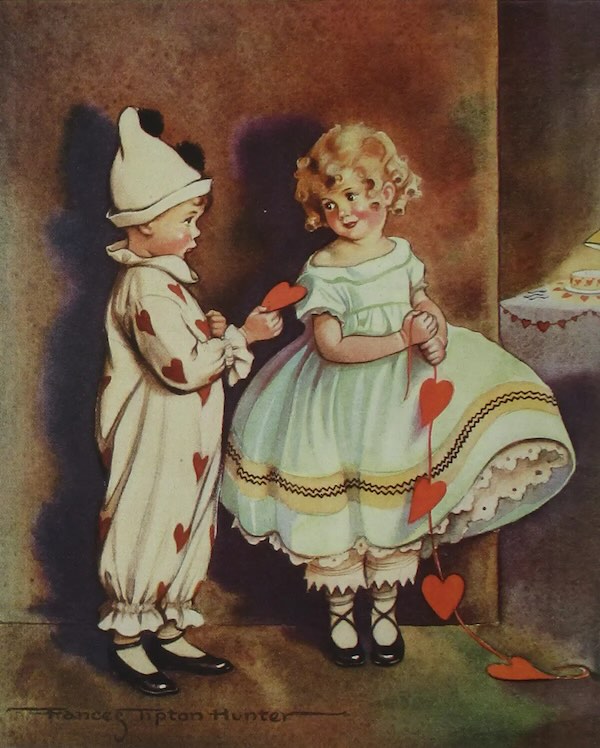
Many schoolchildren still spend part of their classroom hours handcrafting cards or nibbling Sweethearts candies—those small, heart-shaped confections imprinted with sayings like “Love Bug” and “Honey Bun.” Grandparents and parents also gift the kids with cards and treats, and some retirement communities and other organizations may throw parties for dancing and refreshments.
READ: Valentine’s Day brings back that lovin’ feeling
Generally, however, our culture associates Valentine’s Day with romance, as Margery and Elizabeth Brews did. We think of it as a time when a first love may be kindled in the hearts of two teenagers, or when a couple who has spent 50 years as husband and wife share a candlelight meal and renew their vows with a mere touch of finger on finger across the tabletop.
And yet some people in 21st-century America wonder whether romance is dead.
Culture and Custom
“Yes or No?” 1890, by Edmund Leighton. Oil on canvas. Private collection. (Public Domain)
We find this question—“Is romance dead?”—debated on dozens of online sites. Some of those who answer in the affirmative argue from anecdotal evidence, usually based on bad personal experiences. Others take a broader view and blame a culture centered more and more on the individual, a self-absorption that creates a wary fear of commitment. Digital technology with its impersonal singles sites and hook-up apps also takes a bashing for its role in destroying the old customs and etiquette of dating. Meanwhile, the tectonic shifts in relations between the sexes over the last 50 years have muddled the rules of romance and its pursuit.
Some of these complaints have some footing. Evidence from the not-so-distant past reveals that shifts in culture and technology affect the manners and customs of love and romance. Urbanization, for instance, brought young men and women to the cities looking for work, resulting in less parental involvement when it came to courting or choosing a mate. The mass production of the automobile radically changed dating customs. The young man who might once have spent his evenings with a young woman he loved in her family’s parlor now had the wheels to take her unchaperoned wherever they wished to go.
So, the practices by which we fall in love and seek out marriage or a “soulmate” change over time, but the question remains: Is today’s culture rendering romantic love passé?
To better understand the present, looking to the past can often be an enormous help and comfort. In this case, a look at literature might answer this question.
A Whirlwind Literary Tour of Romance: Part I
Romance is at least as old as the written word.
In her Introduction to “The Book of Love,” Diane Ackerman tells us that “Egyptologists have found 55 anonymous love poems” dating back over 3,000 years ago. From one of these poems, “Conversations in Courtship,” comes a description of a beloved, ending with “My heart would be a slave should she enfold me.” The Bible’s “Song of Songs,” a duet between husband and wife, contains equally passionate professions of love: “O that you would kiss me with the kisses of your mouth! For your love is better than wine.”
Down through the ages, poets and writers have sung of passion and love, its sweet and bitter fruits. Like the Roman poet Catullus, they’ve celebrated the triumphs and disasters of falling in love. In “The Aeneid,” for instance, Virgil gave us the cautionary tale of Dido, that queen of Carthage who, pierced by Cupid’s arrows, falls madly in love with Aeneas, abandons her vows of fealty to her dead husband, brings trouble to her people, and eventually dies on a funeral pyre of her own making.
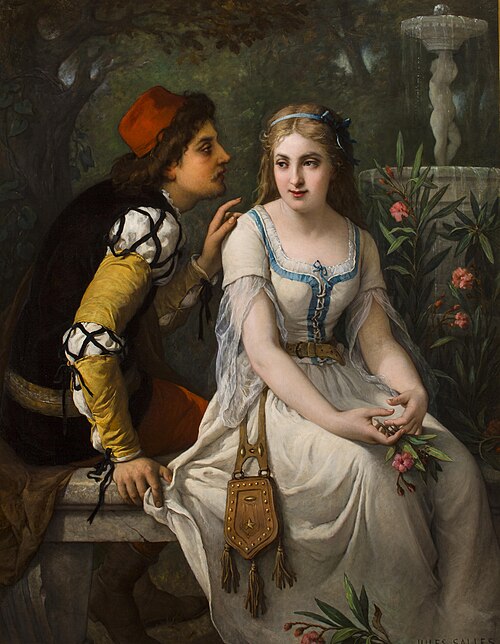
Jump forward to Elizabethan England, and Shakespeare appears—that master of amorous scenes and verse. He, too, wrote a cautionary tale about the dangers of romance in “Romeo and Juliet,” where the love between a boy and a girl ends in disaster, a catastrophe, though marked as well by beauty and purity.
Skip forward three centuries, and romance continues to appear in verse. “How do I love thee?” asked Elizabeth Barrett Browning, and then proceeds to tells us in her beautiful sonnet. Robert Burns sang, “O my Luve is like a red, red rose,/ That’s newly sprung in June.” “Jenny kissed me when we met,” declared Leigh Hunt. “Pillow’d upon my fair love’s ripening breast,/ To feel for ever its soft fall and swell,” John Keats wrote.
Romance was and is a foundation stone of the poetic art.
A Whirlwind Tour: Part II
Novelists, too, have delved into the effects of Cupid’s arrows, which shock and strike the heart, sending the blood racing. Samuel Richardson’s “Pamela,” for instance, which tells the story of a maidservant who eventually reforms her rakish employer and marries him, is generally acknowledged as the precursor of today’s romance novels, which even now make up 33 percent of mass-market paperback sales, according to the website WordsRated.
From Jane Austen’s novels to Margaret Mitchell’s “Gone With the Wind,” from Emily Brontë’s “Wuthering Heights” to Nicholas Sparks’s “The Notebook,” romance of the heart has clearly intrigued both authors and their readers.
And let’s not forget fairy tales. Some people today attack stories like “Cinderella,” “Snow White,” and “Beauty and the Beast” for what they consider sexual stereotypes. But the appeal of fairy tales when shared with the young tells us that the desire for romance is alive and well, even in children.
Films send the same message to their viewers. “Kate and Leopold” (2001), “Sleepless in Seattle” (1993), and the dozens of Hallmark romance movies were and are watched by millions.
All of these books, poems, and films are but a fraction of the works about romantic love. Given humanity’s long fascination with this subject, it seems premature to declare romance dead and gone.
End Notes
Some readers may have noticed that the above contains no adequate definition of romantic love. The reason for this missing piece is simple: No adequate definition exists. Dictionary explanations of the word fall far too short and too flat for our purposes here.
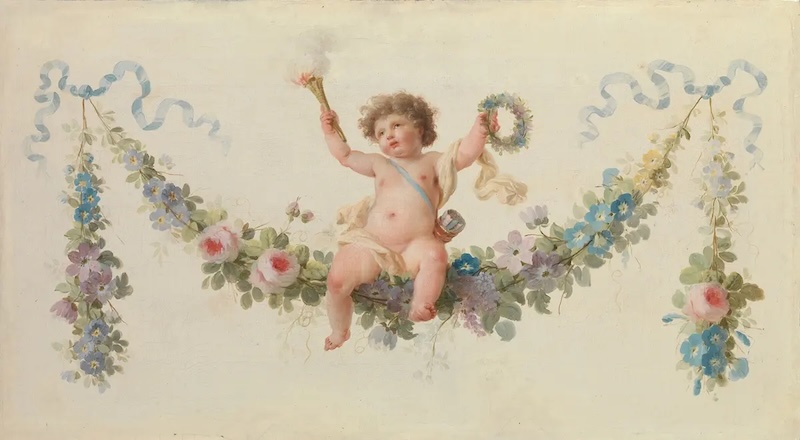
In the collection of poems, stories, essays, and letters mentioned earlier—“The Book of Love,” co-edited by Jeanne Mackin—Ackerman writes of love and romance: “Perhaps this is why Cupid is depicted with a quiver of arrows, because love feels at times like being pierced in the chest. It is a wholesome violence. Common as childbirth, it seems rare nonetheless, always catches one by surprise, and cannot be taught. Each child rediscovers it, each couple redefines it, each parent reinvents it.”
There—that comes closer to what is wanted.
As for those who mourn the passing of romance on this Valentine’s Day, let me gently say, you are wrong. History, literature, and human nature stand squarely in the way of that funeral. The customs of romance will change, there’s no doubt of that, but the roller-coaster ride of the heart in love will remain the same.
If you doubt me, hop aboard and see what happens.
By Jeff Minick | Epoch Times