

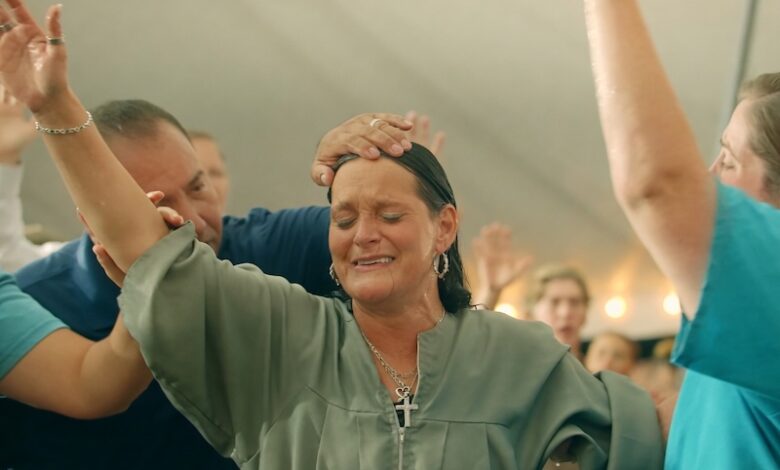
Evangelists such as Billy Graham and Oral Roberts preached to thousands of people at big-tent revivals in the 1940s and 1950s. In a high-tech age, organizers of the Jesus Tent Revival movement are using the same strategy to reach the lost.
It started in 2019 during a powerful event in Kokomo, Ind. “People come in underneath that tent that walked in as atheists, walked in as Buddhists, walked in as Muslim,” Dr. Braden Andersen, founder of Jesus Tent Revival, told CBN News recently.
Inspired by that first night and encouraged by a local pastor, Andersen, a primary care physician and evangelist, made the life-changing decision in 2022 to sell his medical practice and house to take the tent revival nationwide.
“The thought of being able to impact people with the gospel, even in that very moment, just seemed so much more important than the clinics that we had, the work that we did in the emergency room or what have you,” he said. “While I’m thankful for that work, this makes a difference in eternity, and we felt like the time was right. And if America’s this hungry, let’s bring them Jesus.”
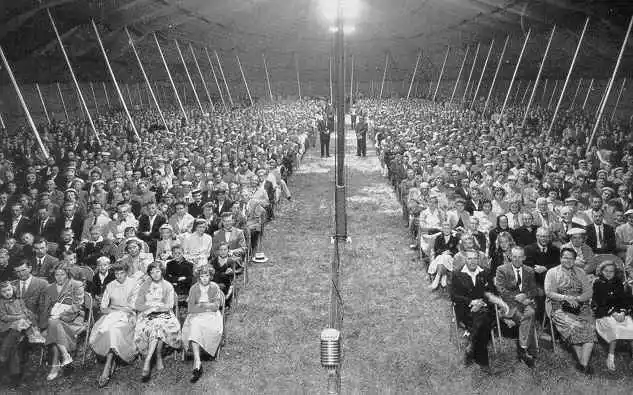
That was also the theme of America’s earlier revivals. They have deep roots in American religious history, dating back to the frontier camp meetings of the early 1800s during the Second Great Awakening. Traveling preachers gathered thousands in rural fields and temporary tabernacles for days of preaching, prayer and emotional conversion experiences that reshaped Protestant Christianity in the United States.
By the early and mid-20th century, evangelists such as Billy Sunday, Graham and Roberts drew massive crowds under revival tents, helping popularize altar calls, public professions of faith and large-scale evangelistic crusades. Historians say the meetings not only fueled church growth but also influenced American culture, music and politics while shaping the rise of modern evangelicalism and Pentecostalism.
They fell out of headlines as ministries opted for high tech gatherings in stadiums and other large venues. But in the process, they may have lost something. A desire for something a more authentic Jesus.
This unprecedented hunger has resulted in people driving for hours and staying in hotels for an encounter with God. “There’s something about the simplicity and the power of that atmosphere that’s just resonating with America,” Andersen said. “America is hungry. I don’t know that I’ve ever seen it this hungry.”
Many who attend the tent meetings testify about receiving newfound freedom. “He saved me from selling drugs, doing drugs, fornication,” Matthew Stewart said. “I was a girl who was just broken and lost,” one woman said. “I was empty, and then I got into this atmosphere where the Lord filled me with the Spirit.”
A hallmark of the tent revival has been the record number of spontaneous baptisms, with lines so long they’re conducted before, during, and after the services.as demand continues to outpace capacity, the movement is expanding internationally with meetings planned for Canada.
“Jesus is hope, and Jesus is peace and Jesus is power,” Pastor Sullivan said. “And I think that’s what our nation, our youth, our middle-aged, our elders, everybody’s looking for. With what’s going on in our world, everybody needs Jesus.”
For many, 2026 is 1926 all over again. Tent revivals are an integral part of America’s 20th century faith history and they’re not going anywhere.
To learn more, visit The Jesus Tent Revival.
–Alan Goforth
#TentRevival #JesusTentRevival #ChristianRevival #Baptism #Salvation #JesusSaves #SpiritualAwakening #Revival #FaithInAmerica #HolySpirit