
Ancient Egyptian Etchings Reveal Earliest Reference to Moses
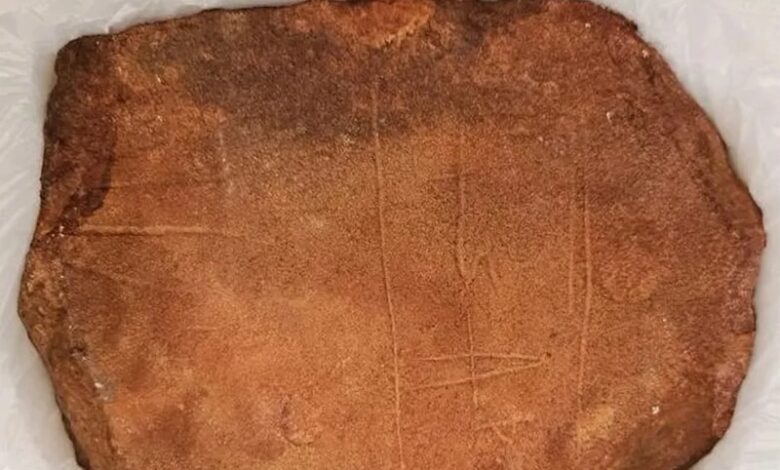
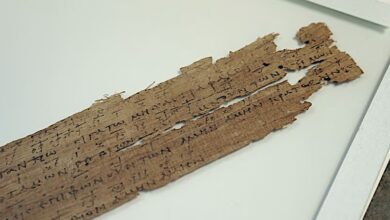
The oldest written reference to Moses outside the Old Testament has been identified in inscriptions found in an Egyptian desert more than a century ago. Researchers found two etchings dating back 3,800 years at Serabit el-Khadim, an ancient turquoise-mining site in the Sinai Desert, Fox News reported.
The two inscriptions, first discovered in the early 1900s, are being reanalyzed by Michael S. Bar-Ron, an American-Israeli epigraphist, who also is a graduate student at Ariel University. The inscriptions, “Zot M’Moshe” and “Ne’um Moshe,” may mean “This is from Moses” and “Declaration of Moses.” If verified, the inscriptions are the earliest written mention of Moses outside the Bible The inscriptions also reference El, a deity associated with the Abrahamic God, while censuring the ancient pagan goddess Ba`alat.
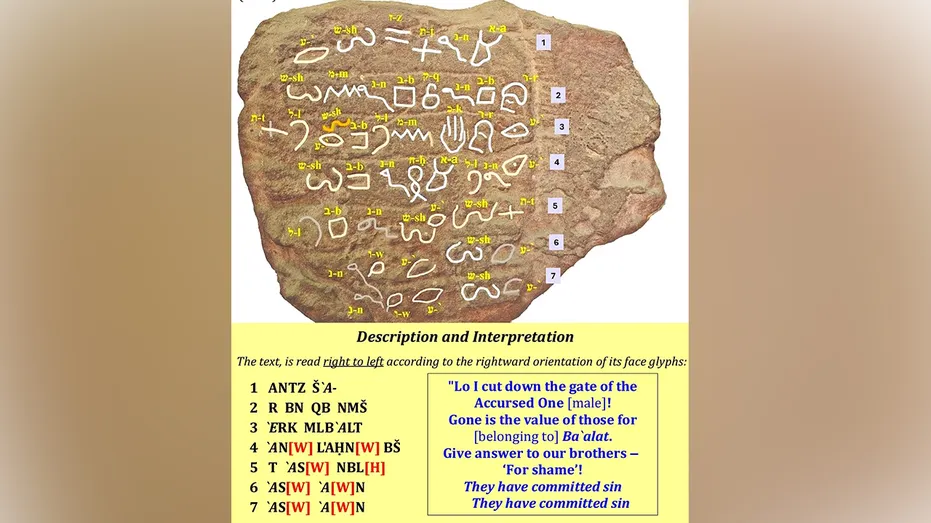
The Serabit el-Khadim site once housed a temple to Ba`al, and some .some of the etchings seem to reflect resistance to the goddess’ worship from Semitic workers.
“Rather than lauding Ba`alat, readings curse out the Ba`alat cult, with words of warning and rebuke to its followers,” Bar-Ron said. “They include the terms ‘BS’ — ‘for shame’ or ‘this is shameful’ — and ‘nimosh,’ which means ‘let us leave’ or ‘remove ourselves.’”
READ: City linked to Moses discovered
Translating the ancient etchings took nearly a decade, he said. “I spent eight years actively involved in the painstaking, oft-frustrating reconstruction of some 23 wordy Proto-Sinaitic inscriptions,” Bar-Ron said. “That is, based on the principles of the foremost greats in the field and informed by the work of my distinguished colleagues in the field.”
He also believes the Moses inscriptions may have a common author, pointing to certain stylistic points such as word usage. Bar-Ron’s larger graduate thesis explores “a Mosaic-type leadership” in the region at the time. He described the latest revelations about the inscriptions as “nonessential icing on the cake.”
“The finding ‘Zot M’Moshe’ and ‘Ne’um Moshe’ were really last-minute discoveries and nonessential to that subpoint (possible Mosaic authorship), within a much more serious thesis,” Bar-Ron said.
–Alan Goforth