
Missouri Pushes to Eliminate State Income Tax

A growing push to eliminate Missouri’s state income tax is drawing support from Republican lawmakers and conservative activists, but many on the left and even some on the right warn the bold plan may “rob Peter to pay Paul.”
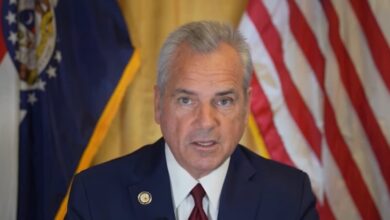
Several proposals introduced this session aim to phase out the state’s income tax, which currently funds about 40% of Missouri’s general revenue. Governor Mike Kehoe has voiced support for developing a long-term plan, while Americans for Prosperity–Missouri is campaigning aggressively for the change. The governor is expected to sign a capital gains tax repeal, which goes into effect by Aug. 28.
Supporters argue that scrapping income taxes would supercharge Missouri’s economy and attract businesses and new residents. “We need to signal that Missouri is open for business,” Sen. Ben Brown told KY3. “Getting rid of the income tax is a big step toward doing that.” Lawkamers are pointing to other states, like Tennessee, that have eliminated personal income tax.
But what sounds like a break for taxpayers may come with strings attached. To offset the billions in lost revenue, lawmakers are considering expanding sales taxes—possibly to include services like child care, home repairs, or even legal advice.
You’re not cutting taxes, you’re just shifting them
Amy Blouin of the Missouri Budget Project isn’t buying the promise of savings. “You’re not cutting taxes, you’re just shifting them,” she said. “And that shift hits lower- and middle-income families the hardest.”
Critics also point out that wealthier residents stand to gain the most, while essential services like public schools, roads, and health care could face serious cuts. Some plans project a revenue loss of $400 to $600 million per year.
Sen. Kurtis Gregory, voiced strong reservations during committee votes in the spring. He thinks farmers will ultimately suffer if sales taxes rise. The Republican from Marshal stated, “I don’t know where that sales tax rate is going to end up, but … folks are going to be seeing a $50 to maybe $60 an acre increase in cost of production of row crops.”
That’s been proven true in states like Florida, Tennessee, and Texas, which have no income tax; they still need revenue, and residents pay for it in other places. No-income tax states typically have a higher sales tax, with Tennessee having one of the highest combined state and local sales tax rates in the country. But it’s not just sales tax. Property taxes, excise taxes and industry-specific taxes often go up. Various fees also sneak in, surprising residents when they head to the DMV to get tags for their vehicles or renew their driver’s license, or purchase a fishing license.
The governor’s statement on the Fiscal Year 2026 budget forecasts a shortfall for future years:
The Office of Administration’s Division of Budget and Planning estimates a nearly $1 billon shortfall in general revenue starting in FY27. Contributing to this shortfall, ongoing general revenue spending authorized in the FY26 budget is projected to outpace ongoing revenues by over $1 billion and grow larger in future years. While Missouri currently has a general revenue fund balance to absorb some of this imbalance in the short term, the current trajectory of state-level spending grows this imbalance, exhausts any remaining surplus, and leads to the aforementioned $1 billion shortfall starting in FY27, if correction is not made.
That’s bad news for the “no income tax” movement. It will be the topic of political ads and commentators; Missourians should take a closer look themselves. When all is said and done, they’ll pay for state services one way or another, say observers on both sides.
–Dwight Widaman