

‘The Egyptian’: When Hollywood Built Egypt Without Computers
Egypt never looked so good in the 1950s
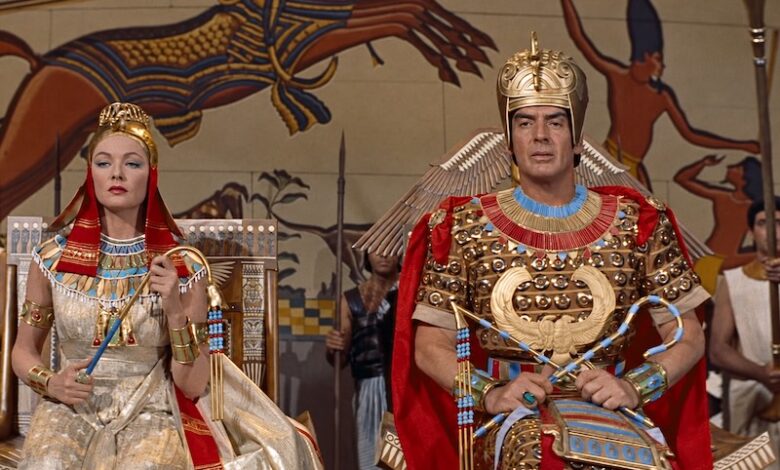
Ancient Egypt has a way of making Hollywood lose all sense of moderation. Give a studio a pharaoh, a few columns, and several thousand extras, and soon somebody is ordering enough gold paint to alarm the accounting department.
Twentieth Century-Fox took its turn with “The Egyptian” (1954), a 2-hour-and-19-minute CinemaScope production directed by Michael Curtiz. The studio made the film from Finnish author Mika Waltari’s enormously successful 1945 novel.
Howard Hawks followed with “Land of the Pharaohs” (1955), and Cecil B. DeMille broke out with “The Ten Commandments” (1956) the year after. For a few years, ancient Egypt had Hollywood working overtime.
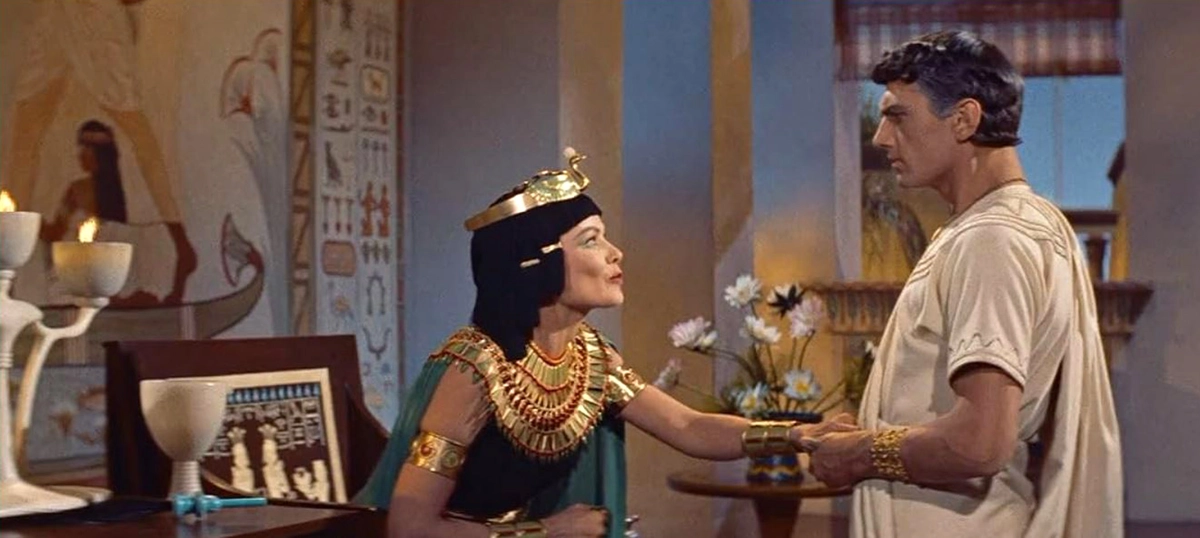
“The Egyptian” reaches into one of the more unusual periods of ancient Egyptian history: the 18th Dynasty and the reign of Akhenaten. Born Amenhotep IV, the pharaoh promoted worship of the Aten, the sun disk, and moved his capital from Thebes to a new city called Akhetaten. After his death, much of his religious program was undone, and the old order returned.
READ: Ancient Christian Egyptian city discovered
Waltari had a deep well of history to delve into. Although his physician protagonist, Sinuhe, is fictional, the name reaches much farther back to the ancient Egyptian “Story of Sinuhe,” which was written centuries before Akhenaten.
Curtiz also came to the assignment with a long memory for this kind of filmmaking. Two decades before the masterful “Casablanca” (1942), he’d directed “Sodom and Gomorrah” (1922) in Europe and later “Noah’s Ark” (1928) for Warner Bros.
By 1954, he’d spent a lifetime moving cameras through crowded sets. Twentieth Century-Fox handed him a virtual cornucopia to bring to life here, including numerous major sets and an army of more than 5,000 extras. Edmund Purdom stepped into the leading role as Sinuhe after Marlon Brando left the production before filming began.
A Physician Among Pharaohs
Sinuhe (Purdom) enters life in dramatic fashion, found as a basket-bound baby floating down the Nile River. Adopted by a physician, he grows up to follow the same profession in Thebes, Egypt, where medicine had already developed a sophisticated written tradition.
Business isn’t exactly booming, and the family’s one-eyed servant, Kaptah (Peter Ustinov), soon attaches himself to the young doctor. Tavern girl Merit (Jean Simmons) sees considerably more promise in Sinuhe than he sees in himself, while his closest friend, Horemheb (Victor Mature), dreams of a military career.
A lion hunt changes both men’s fortunes. They find a young man praying to the sun while a lion closes in. Horemheb kills the animal, and Sinuhe treats the stranger after he suffers a seizure.
READ: Discovery linked to Moses
Only afterward do they learn that the man they rescued is Akhnaton (Michael Wilding), Egypt’s new pharaoh. Sinuhe becomes royal physician, and Horemheb gets his military opportunity.
Sinuhe’s new position also introduces him to Nefer (Bella Darvi), a Babylonian courtesan with expensive tastes and wealthy admirers. Thoroughly smitten, he starts making decisions that would cause any sensible accountant to throw himself into the Nile.
Meanwhile, Akhnaton’s devotion to the sun god Aten is creating trouble with Egypt’s established priesthood, drawing Sinuhe into a religious and political fight far beyond his medical practice.
Pharaohs Before Computers
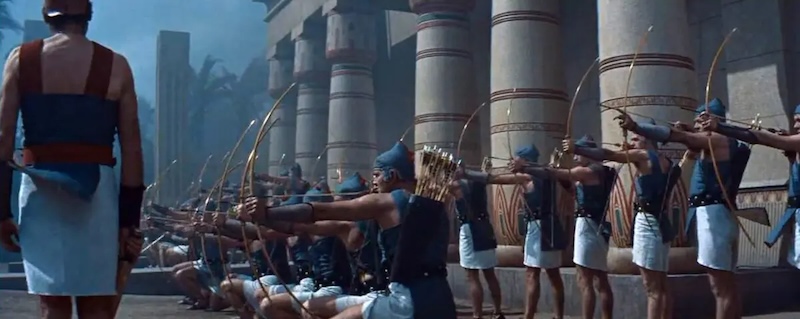
Modern moviegoers have seen digital crowds multiply across screens. In contrast, Curtiz used more than 5,000 extras on set in this film. Every person packed around a temple or milling throughout Thebes was somebody who had to report for work, put on a costume, and find the correct patch of ancient Egypt to stand on before the director yelled “Action!”
The research staff consulted hundreds of books, and museums supplied ancient objects for reproduction. Dozens of sets were authenticated for this grand-scale production.
Fox put similar effort into what surrounded the extras. The research staff consulted hundreds of books, and museums supplied ancient objects for reproduction. Dozens of sets were authenticated for this grand-scale production.
Cinematographer Leon Shamroy then photographed the results across that very wide CinemaScope frame, filling it with carved walls, crowded streets, and richly dressed interiors. It’s no wonder his work received an Oscar nomination for color cinematography. The movie frequently resembles an enormous illustrated history book whose pages suddenly started moving.
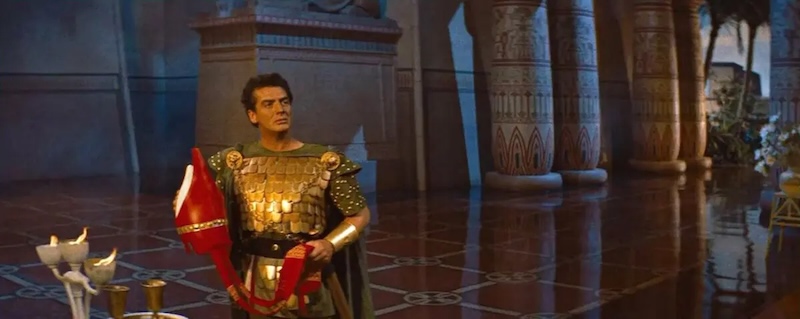
The film’s depiction of Akhnaton is considerably more fanciful. His worship of Aten gradually acquires language and imagery that a predominantly Christian audience in 1954 would have recognized immediately.
Followers carry the ankh as a “Cross of Life,” Akhnaton preaches mercy and refuses violence, and believers suffer for their faith. The final reference to Christ makes the intended connection even clearer.
This movie shouldn’t be mistaken for a documentary account of Atenism, though it tells us something interesting about how Hollywood chose to present this ancient religious upheaval to American audiences of that era.
For all of its historical liberties, “The Egyptian” remains a fascinating example of how far a major studio would go to recreate a vanished world. Curtiz had thousands of extras and sprawling sets at his disposal, and much of that appears on the screen in spectacular fashion.
“The Egyptian” is available on fuboTV, YouTube, Sling TV and Hulu. It is also available for purchase as a DVD on Amazon and you can check your local Library system.
‘The Egyptian’ NR | 2h 19m | Drama | 1954. Director: Michael Curtiz Starring: Edmund Purdom, Jean Simmons, Victor Mature, Gene Tierney Not Rated Running time: 2 hours, 19 mins Release Date: Aug. 24, 1954 Rated: 4 stars out of 5.
By Ian Kane | The Epoch Times