
Ancient Christian City Unearthed in Egypt’s Western Desert
Includes home of early church deacon
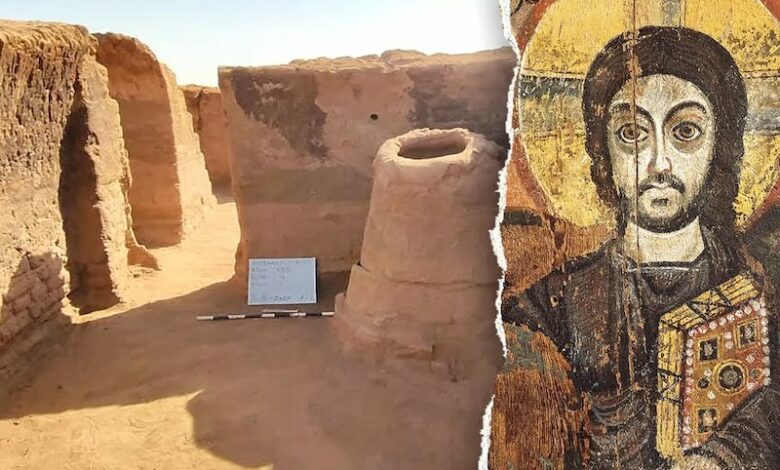
An ancient Christian city, complete with a church and the home of a deacon, has been uncovered in Egypt. Archaeologists found the city during excavation work at the Ain al-Sabil archaeological site, Fox News and other outlets report.
The settlement lies in the Dakhla Oasis of the New Valley Governorate, about 185 miles west of Luxor and far from the great population centers of the Nile Valley. Egypt’s Ministry of Tourism and Antiquities announced the discovery July 3 after excavations by a mission from the Supreme Council of Antiquities.
“All of the city’s buildings were constructed of mudbrick,” Egypt’s Ministry of Tourism and Antiquities said in statement. “*These include the basilica church, dating to the mid-fourth century A.D.; the remains of two watchtowers on the city’s outskirts; a fortress with thick defensive walls and a cluster of houses featuring large halls and vaulted ceilings.”
Mahmoud Massoud, director general of Dakhla Antiquities and head of the excavation mission, said the settlement contained “all the architectural components of a fully functioning community.” Preserved domed ovens, kitchens and grain-grinding tools indicate that residents produced and prepared food within the city.
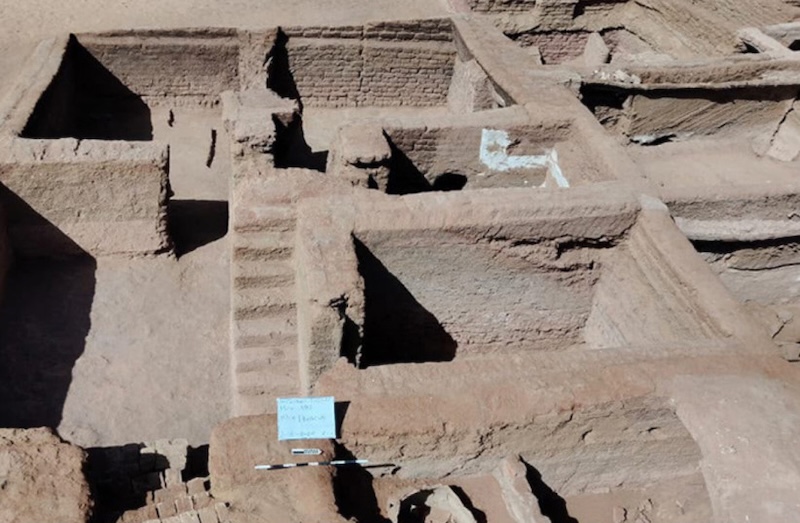
One of the most notable structures uncovered was the home of Tisos, a church deacon, which dates to the second half of the fourth century A.D. Archaeologists also identified the house of Tapibos, which archaeologists believe served as a house church before the city’s basilica was constructed. The city followed “a well-planned urban layout,” according to Diaa Zahran, head of the Islamic, Coptic and Jewish Antiquities Sector at the Supreme Council of Antiquities.
READ: Egyptian sword linked to Ramesses II discovered
The Tapibos house dates to the early fourth century, making it older than the basilica. If the building’s use as a house church is confirmed, the discovery could document the transition from Christians worshipping in private homes to gathering in purpose-built churches after Christianity gained legal protection in the Roman Empire.
The basilica was built only a few decades after the Edict of Milan in A.D. 313 ended official persecution of Christians. Its central location suggests that Christianity had become an established part of public life in the oasis, according to an analysis by Biblical Archaeology Review.
“It features main streets running north to south intersected by east-west cross streets, creating open squares and plazas,” Zahran said. “At the center of the city stands a basilica church overlooking one of the principal streets.”
Archaeologists also uncovered household pottery, bottles used to store oils and perfumes, oil lamps and stone tools for grinding grain. A treasure trove of coins was found as well, including well-preserved bronze coins bearing images of Byzantine emperors, Latin inscriptions and Christian symbols. Some gold coins date to the reign of Emperor Constantius from 337 to 361 A.D.
The coins place the community within one of the most consequential periods in Christian history. The fourth century saw Christianity move from a persecuted faith to an increasingly public institution, with churches, clergy and organized communities appearing across the Roman world.
One of the most significant discoveries at the site was an archive of written documents, said Zahran Mahdi, director of excavations for the Islamic and Coptic Antiquities Sector. The archive consists of 200 ostraca (broken pieces of pottery or limestone) with Coptic and Greek inscriptions.
“The texts record sales transactions, correspondence and other details of everyday life,” Mahdi said. The inscriptions may help researchers reconstruct not only the religious life of the community but also its trade, family relationships and local economy.
The use of both languages also reflects the culture of late Roman Egypt. Greek remained an important language of government and commerce, while Coptic was the Egyptian language written primarily with a modified Greek alphabet. The bilingual records offer evidence of a Christian community connected to the wider Roman world while retaining its Egyptian identity.
Hisham El-Leithy, secretary general of the Supreme Council of Antiquities, said the discovery provides new information about the architectural, social and economic life of Dakhla Oasis during the period.
The city is especially valuable because of its remote location. Dakhla, one of Egypt’s Western Desert oases, helped connect the Nile Valley with routes extending into central Africa. The settlement shows that organized Christian life had reached far beyond Alexandria and Egypt’s other major urban centers by the middle of the fourth century.
Egyptian Tourism and Antiquities Minister Sherif Fathy said the find helps “highlight the cultural diversity witnessed by the Egyptian oases throughout different historical periods.”
Egypt, a center of early Christianity, has been the site of several historic Christian discoveries in recent years. This spring, Egyptian officials announced they had found an ancient monastery dating to the dawn of Christianity in Wadi El-Natrun. Earlier this year, archaeologists uncovered an ancient Christian monastic complex in Upper Egypt, shedding light on monastic life before the Arab conquest.
Together, the discoveries are expanding the archaeological record of Egyptian Christianity beyond famous monasteries and theological centers. At Ain al-Sabil, the church, clergy residences, family homes and everyday records provide an unusually complete portrait of Christians who built a community and practiced their faith deep in Egypt’s Western Desert.
–Alan Goforth