
Rosh Hashanah: Meaningful Insights for Christians This Week
Rosh Hashanah, or Jewish New Year, begins at sundown on Monday and continues through sundown on Wednesday. It is the beginning of the Jewish high holy days that continue through Yom Kippur on October 2.
The High Holy Day was known as the Feast of Trumpets in biblical times and would have been celebrated by Jesus and others, like the Apostle Paul. After the destrcution of the Temple in 70 AD, Jewish rabbis morphed it into the current holiday of Rosh Hashanah.
You might need a trumpet. Rosh Hashanah means “head of the year’” and marks the start of the new year in the Jewish calendar. It’s referred to in Leviticus 23:24-25 as “a sacred assembly commemorated with trumpet blasts.” Hence its other name , the Feast of Trumpets. A shofar is blown during the service at the synagogue.
It is the new year for people, animals and legal contracts. Technically, there are four starting points in the Jewish calendar. Rosh Hashanah comes at the beginning of the month of Tishri, the seventh month, but it is the point at which the Jewish year is marked and the number of the year increases. It is the new year for people, animals and legal contracts.
The exact date varies. The celebration happens on the first and second days of Tishri (usually in September or October). Observance of the day varies. Orthodox Jews will celebrate across two days, while some reformed Jews often will celebrate only one day.
It’s an Adam and Eve thing. At Rosh Hashanah, Jews celebrate the creation of the world.
It’s not all happy. Amid the merriment, Rosh Hashanah has a reflective note. The day before, some Jews will visit the graves of relatives or righteous people to pray to God for a sweet new year. It is believed that the prayers are heard “in the merit of” the righteous.
There’s a special moment to feed the ducks. Well, not quite. Rosh Hashanah is seen as a time to cast off sin and ask for forgiveness, which is called Tashlich. The idea is taken from Micah 7:19: “You will again have compassion on us; you will tread our sins underfoot and hurl all our iniquities into the depths of the sea.” The ceremony used to be marked by emptying your pockets into the water, although today it is more common to throw breadcrumbs.
White as snow. To symbolize the cleansing of sin, some will wear white, and the ark hanging also is changed to white.
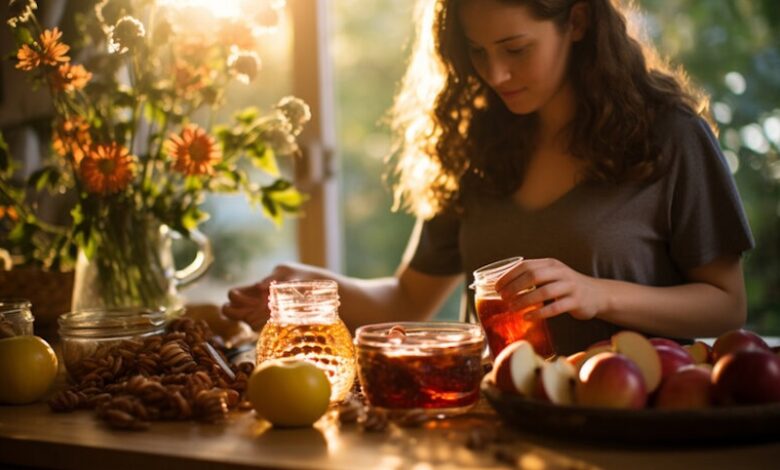
There is good food. Despite the somber side, no festival is complete without feasting, and this is no exception. Traditional foods include dipping apples in honey, honey cake and raisin challah bread, all symbolizing the hope of a sweet new year. The challah is usually round to represent completeness.
–Metro Voice with info from Christianity Today