

Forrest Frank Punts the Dove Awards, Takes on the Christian Music Industry
Criticism by other artists reveals darker side

The facade of unity in contemporary Christian music cracked this week after Forrest Frank did not attend the Dove Awards held Oct. 7.
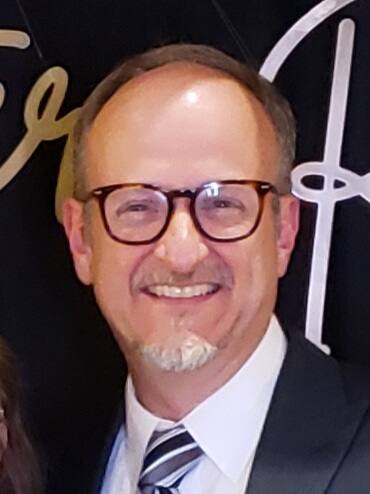
The singer-songwriter, who has grown a grassroots following with hit songs like “Good Day,” announced his decision to his more than 6 million followers on Instagram stating, “I don’t want to receive a trophy for something that is from Jesus and for Jesus.” He asserted his independence from the industry saying his true reward is eternal life in Jesus, not the accolades of a multi-billion music industry and its earthly accolades.
Frank’s announcement created a range of reactions. His decision brought support from some, like CeCe Winans, who wrote, “Follow your convictions.” Kings Kaleidoscope suggested that artists could forgo submitting their work to avoid the awards process altogether. Surprisingly, for a statement of concience, his decision brought criticism from some industry figures who questioned Frank’s stance. Rapper Jelly Roll, who does not consider himself a Christian artist, trolled Frank, stating, “Won’t receive trophy from something for Jesus but will take the profits from something from Jesus for Jesus… make MILLIONS of dollars doing that same thing.” He questioned the consistency of rejecting awards while earning a living from Christian music.
Had a lot of people asking where i was today, so i felt like i needed to share on here. This is not a refusal to be a light in dark places…this is a refusal to go on stages and get awards. I already got the greatest award of all time. Hope y’all can understand love you guys 🤍 pic.twitter.com/hUrMMob5RA
— Forrest Frank (@forestfrank) October 7, 2025
The Dove Awards and favoritism
For over a decade, the Dove Awards has been accused of favoring big and radio-friendly artists while ignoring those with significant ministry or spiritual impact but less appeal to the broader mainstream. Some pointed to this year’s annual Dove Awards featuring performances by artists like Brandon Lake, Lauren Daigle, and Jelly Roll, with Lake winning Artist of the Year to wild applause. While these artists are undoubtedly talented, many now question whether the glitzy production and accompanying glittering awards reflect the true diversity of those in the Christian music arena and the impact of the songs being produced.
The attacks on Frank seem shallow to many fans
The attacks on Frank seem shallow to many fans, especially after the silence of artists and industry commentators after Lecrae’s announced earlier this year he had attended the infamous rave parties hosted by Sean “Diddy” Combs. Combs was sentenced recently to four years and two months in prison and a half-million dollar fine for transportation to engage in prostitution. Victims said the crimes occurred at the parties.
Lecrae denied involvement in any inappropriate activities, saying he had only attended “a couple” of such parties, and pushed back on the idea that those appearances necessarily imply compromise, calling it a mix of “networking” and social proximity.
Despite the controversy, there has been little public accountability from the Christian music industry regarding his actions. This lack of response contrasts with the scrutiny faced by Frank, not for a questionable moral decision like Lecrae, but for Frank’s heartfelt decision to decline an award. It’s left many Frank fans rolling their eyes at the duplicity in the industry and reinforcing stereotypes of what much of Christian music has become-a good ole boys network.
Who owns Christian music?
Frank’s decision to lean into his music and away from a self-congratulatory music industry continues a broader discussion about the commercialization of Christian music that has even reached into church worship services.
It’s difficult for some Christians to believe, but Christian Music is a mega business
It’s difficult for some Christians to believe, but Christian Music is a mega business (K-Love’s parent company is a $1 billion operation) that is strongly influenced by secular record labels and large media companies.
Universal Music Group, parent company of Capitol Music Group, holds the contracts for the likes of Katy Perry and Ice Spice as well as Chris Tomlin, TobyMac, and Amy Grant.
Sony owns SZA, whose fans describe her songs as “hoe anthems”. But the company also manages Casting Crowns and Zach Williams.
These dubious business arrangements lead critics to question whether the focus has gone overboard in its shift from ministry to marketability and focus on play-worthy songs seemingly made for a hyped-up K-LOVE rotation. Musicians and singers like Frank, who contend they want to prioritize their faith over fame, are challenging the status quo, secular conglomerate control over much of Christian music, and encouraging a reevaluation of what it means to succeed in the industry.
How do you measure success?
While Frank’s stance may not be universally appreciated, it serves as a reminder that the true measure of success in Christian music should be faithfulness to one’s calling, not the accumulation of awards or accolades.
Those awards, including the Doves, are also in the spotlight.
The Dove Awards have long been criticized within Christian music circles. Over the years, critics have accused them of favoring the same few artists, being too commercial, and too cozy with industry interests. For example, some younger or independent worship artists have complained their songs never receive radio play or award visibility, regardless of spiritual impact or increasing congregational use.
As documented in historical accounts of the GMA’s award process, even in early decades, accusations of vote tampering or favoritism surfaced. The fact that in 2025 the major winners followed familiar names has done little to quiet those critiques.
At this week’s Dove Awards at Nashville’s Bridgestone Arena, the winners included Brandon Lake (Artist of the Year), CeCe Winans, Phil Wickham, for King & Country, and TobyMac, among others. These are artists who already dominate Christian radio and playlists. Critics wondered: was this year’s slate truly an elevation of fresh voices-or a reinforcement of the status quo? A question asked by industry watchdog The Christian Beat.
In a movement that claims to honor Jesus above all, it’s worth asking: if award shows elevate the commercially safe and socially connected, is the recognition truly spiritual, or a reflection of who already has influence? If LeCrae can attend high-profile and infamous drug and sex parties with few repercussions, why must Forrest Frank face sharp questioning or even derision for turning away from trophies?
That tension between the two underscores the very system Frank seems to be resisting-an industry that measures success not by sacrificial faithfulness, but by who already holds the microphone.
–By Dwight Widaman