
Kansas Republicans Face Post-Election Reckoning After Marshall Defeat
First in a series on Kansas 2026 politics
While Republicans did poorly nationally, in Kansas the results were a mixed bag. The outcome was a combination of weak candidates at the top of the ticket running for both Senate and governor, Democrats literally buying the election on several levels and, of course, the national “blue wave” that seems to have hit everywhere. With care and hard work on the part of Kansas’ traditional Republican majority, none of these need impact even the next cycle.
Political Commentary by John Altevogt
Since there will be no end of national analyses, this will focus solely on our Kansas races in a short series of columns.
The US Senate Race
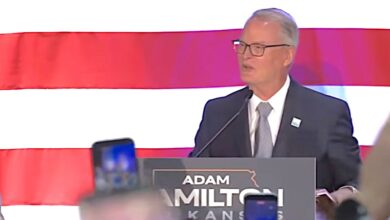
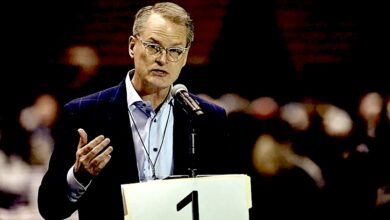
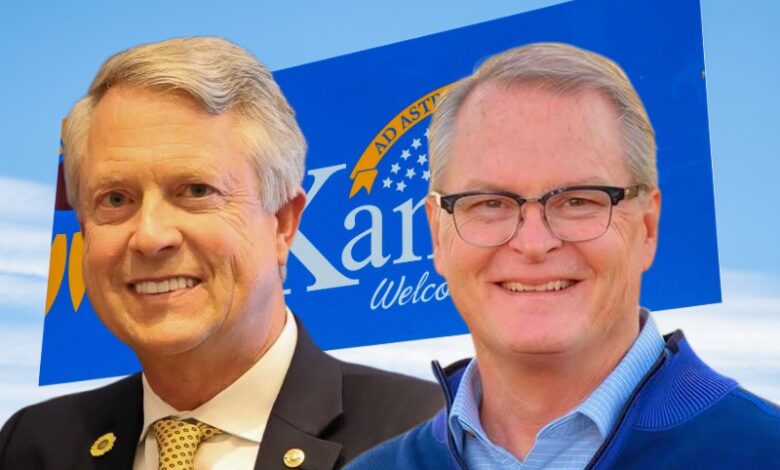
The biggest disaster for Kansas Conservatives was obviously the US Senate race between Sen. Roger Marshall and Adam Hamilton, the lead pastor of Church of the Resurrection, a large Johnson County megachurch. In essence, Hamilton beat a man who had clearly retired from the Senate long before the race started and did little to protect the seat until it was far too late.
Indeed, a common rumor indicating the overconfidence of Kansas Republicans regarding the Senate seat was that Jeff Colyer would leave the primary, giving the race to Masterson; Marshall would win, then retire, perhaps with a juicy appointment by President Trump; and Masterson would appoint Colyer to the Senate. True or not, the fact that it was widely spread among Republican insiders is a good indication of how they perceived Marshall’s motivation for any rigorous campaigning.
It’s hard to overstate just how hard it was for any Republican of any caliber to lose this race.
It’s hard to overstate just how hard it was for any Republican of any caliber to lose this race. It had been in Republican hands for almost a century. Republicans dominate the voter rolls. Worse yet, many of the most damaging allegations used against Marshall could have been greatly refuted, or at least minimized, had even a modest attempt been made to do so.
Perhaps the most damaging was a New York Times article concerning medical collections that was so egregiously biased that a prompt and thorough response could have easily called its conclusions into question.
Instead, Marshall allowed the local media to regurgitate the Times article repeatedly while Hamilton’s ads outrageously transformed Marshall from a man who had delivered thousands of babies safely in an underserved area into a monster preying on the poor and downtrodden.
Marshall’s people did make a half-hearted attempt to get one of the most deceitful of those ads taken down. However, Hamilton’s team seemed to use the publicity to broadcast them even more widely. Indeed, in the final days of the campaign, that ad was still running virtually nonstop.
Allegations about Church of the Resurrection
It’s not like Hamilton was without flaws. His sermons were considered to be notoriously heretical, and Hamilton was also considered one of the central figures in the recent split in the United Methodist denomination. Name a “woke” issue, and Hamilton was on board.
But even more damning were stories coming from longtime parishioners of Hamilton’s church that described various internal scandals, ranging from tawdry land deals that allegedly cost some parishioners their savings to allegations that the church repeatedly protected a child molester on its staff.
Unfortunately for Marshall, many of the more damning allegations against Hamilton only appeared in comments on social media from former COR members, along with tales about their failed attempts to generate any interest from Marshall’s staff. One did see early attempts to post quotes and pictures of Hamilton’s more bizarre statements. However, the audience for such claims was limited and primarily useful for only a portion of Marshall’s base.
Throughout the campaign, frustrated former COR members offered documented evidence of Hamilton’s wealth and his multiple homes that made Marshall’s assets seem paltry by comparison. And yet the only commercials discussing personal wealth were those put out by Hamilton and the various PACs supporting his campaign. Those focused largely on his waterfront mansion in Florida (allegedly up for sale) and his personal wealth, reputed to be ten million dollars, which in the ads was alleged to have been made by charging outrageous interest rates and throwing pregnant women in jail.
One looked in vain for anything from the Marshall campaign demonstrating that Marshall’s assets were dwarfed by Hamilton’s largesse. Pictures of Marshall’s Florida property were also accompanied with allegations that he lived in Florida and had traveled there inappropriately on the public’s dime.
One story that did get some traction was a documented case of a child molester employed by COR.
One story that did get some traction was a documented case of a child molester employed by COR. The first year children made allegations against the molester, the church is alleged not only to have ignored their claims but was even accused of giving a sermon chastising the children for making the allegations. The following year, the molester was caught in the act, and only then was anything apparently done to hold him accountable.
However, even that story was countered in an avalanche of ominous ads claiming that Marshall had voted against releasing the Epstein files, with the implication that Marshall had personally protected wealthy and powerful child molesters. The ads accusing Marshall of protecting child molesters were paired with positive ads claiming that Hamilton, whose church had protected a child molester, had personally aided in turning his molester over to the authorities.
Money floods into Kansas
The fact that Marshall seemed unwilling or unable to come to his own defense opened the floodgates of money that poured into Kansas, with the latest total estimated at $117 million. However, the source of at least a portion of that may lead to the one bright spot in this campaign for Kansas Republicans.
According to a recent article in Brad Cooper’s Sunflower State Journal, a complaint has been filed with the Federal Election Commission alleging, among other things, that a dark money group, United Futures, Inc., constituted a straw donor scheme designed to conceal the source of its funds in violation of federal election laws. It is further alleged that United Futures was then the sole source of funds for Vote Kansas, a super PAC supporting Hamilton, and that Vote Kansas “knowingly participated in the ‘straw donor scheme.’” Even more serious is the allegation that “[T]he PAC appears to have had about 15 staffers, including several who were also on the payroll for Hamilton’s Senate campaign.” That alone would suggest coordination between the campaign and the PAC, another violation.
Unfortunately, the FEC only has two sitting commissioners out of six (the Republican-controlled Senate failed to approve Trump’s two nominations) and hence cannot raise a quorum to conduct business, so it is unknown when the complaint might be addressed.
Next: The Race for the Governor’s mansion.
#KansasPolitics #RogerMarshall #AdamHamilton #KansasSenate #2026Election
 –John Altevogt is a Kansas political contributor for Metro Voice and former Kansas City Star columnist. He previously chaired the Wyandotte County Republican Party and served as associate vice-chair of the Kansas Republican Party. In 2026, he served as treasurer of the No Labels Kansas Party and was a member of the KCK Landmark Commission and the region’s Selective Service Board.