
Archaeologists Uncover Rare Early Image of Jesus
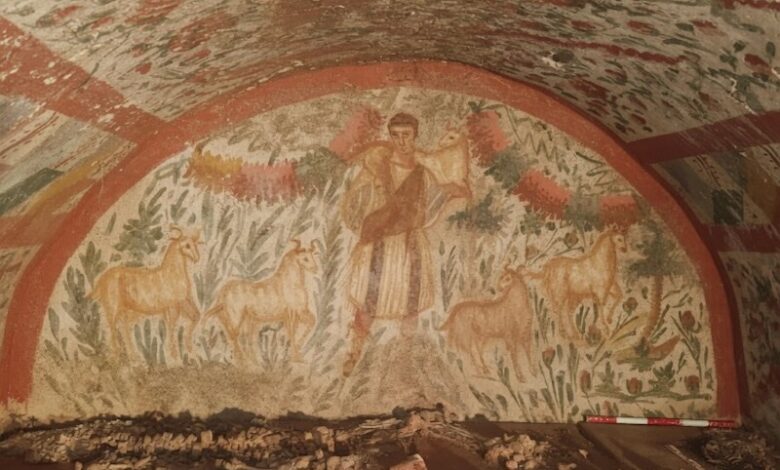
The face of Jesus emerging from a sealed Roman-era tomb in northwestern Turkey does not look like the familiar image known to most Christians today.
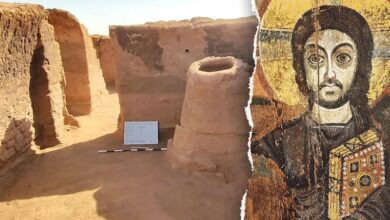
Archaeologists near Iznik, the ancient city of Nicaea, have uncovered a rare third-century fresco showing Jesus as the Good Shepherd, clean-shaven, youthful but dressed in Roman-style clothing while carrying a goat across his shoulders. Researchers say the find adds an important piece to the long Christian history of ancient Anatolia, where the faith spread under Roman rule and later helped shape the doctrine still confessed by churches around the world.
The Associated Press reported that the fresco was found in an underground burial chamber in Hisardere, near Iznik. The city is better known in Christian history as the site of the Council of Nicaea in A.D. 325, where church leaders debated the nature of Christ and adopted what became known as the Nicene Creed.
That early image matters because it comes from a time before later Christian art fixed the now-familiar image of a bearded Christ. It also predates the cross becoming Christianity’s dominant visual symbol.
Eren Erten Ertem, an archaeologist from Iznik Museum, told the AP the frescoes showed “a transition from late paganism to early Christianity, depicting the deceased being sent off to the afterlife in a positive and fitting manner.”
READ: How Christianity Saved Western Civilization
Turkish archaeologists said the tomb likely dates to the third century. Its sealed condition helped preserve the painting, leaving visible details that normally disappear in damp or disturbed burial sites.
The Good Shepherd image was common among early Christians. Scholars have long noted that early believers used shepherd imagery to emphasize care, rescue and eternal life, themes rooted in Scripture and also familiar in Roman-era art.
The Iznik discovery is part of a wider pattern of finds in Turkey, where archaeologists have identified churches, tombs, inscriptions and artifacts tied to the growth of Christianity under Roman rule. The region was not a side road in church history. It was one of the main roads, yet today most sites remain unexcavated. The Apostle Paul was born in Tarsus and John spent some of his final years in Ephesus, a site that Metro Voice included on a 2025 Steps of Paul tour to Greece and Turkey. Tradition says that Mary, the mother of Jesus, also lived in Ephesus in her later years.
Researchers also continue to study how early Christians lived alongside the Roman imperial cult, which honored emperors with religious devotion. Until well into the second century, followers of Christ typically gathered in synagogues as the fledgling movement was still seen as a part of Judaism. Both Jewish and Gentile believers shared the same persecution for their faith in Jesus under Roman rule. That pressure helps explain why some New Testament writings, especially Revelation, use sharp language about empire, worship and loyalty.
Modern Turkey is overwhelmingly Muslim, but its landscape still holds layers of Christian history. The fresco near Iznik, say historians, does not change the basic story of early Christianity. It makes part of that story easier to see.
–Dwight Widaman