

Dead Sea Scrolls continue to affirm the reliability of Scripture
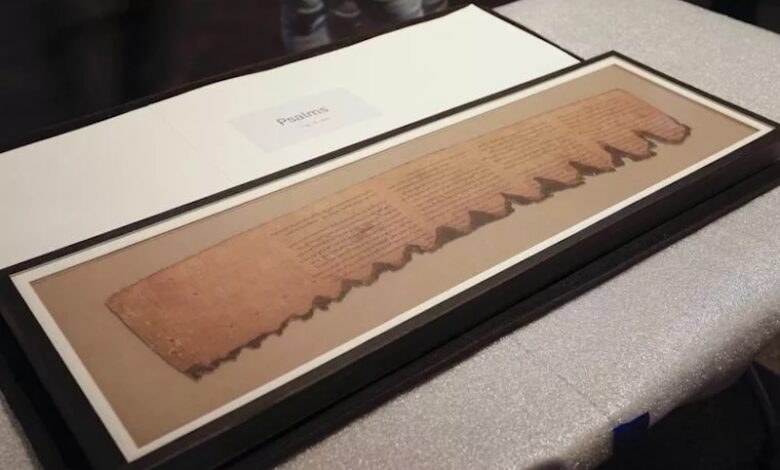
For Christians, faith in the Bible is both a spiritual conviction and confidence that Scripture has been faithfully translated for over two thousand years. Few discoveries have reinforced that confidence more powerfully than the Dead Sea Scrolls.
First discovered in 1947 in caves near the ancient settlement of Qumran, the scrolls include portions of nearly every book of the Hebrew Bible, copied more than 2,000 years ago. Their age places them centuries closer to the original authors than any biblical manuscripts previously known.
“Before the scrolls were found, our earliest Old Testament manuscripts were what are called the Masoretic texts from right around A.D. 1,000,” says Museum of the Bible curator and scholar Robert Duke. “Some of the Dead Sea Scrolls are dated back to the second or even third century B.C., more than a thousand years earlier.”
When the scrolls first came to light, many critics predicted they would expose major flaws or contradictions in the biblical text. Instead, scholars were struck by how closely the ancient manuscripts aligned with later copies used by Jewish and Christian communities for centuries.
READ: The amazing lead tablet found at Joshua’s Altar
“In general, there was a lot of fidelity between what we have from 2,000 years ago and what we can compare it to with later manuscripts,” Duke said. “There are variants, but most of them are incredibly minor.”
Biblical scholars note that these differences-often involving spelling, word order, or small phrasing changes-are routinely acknowledged in modern study Bibles and do not alter core doctrines or narratives. Rather than weakening Scripture, the scrolls have strengthened confidence in the care with which it was transmitted.
“What the Dead Sea Scrolls demonstrate is not a corrupted Bible, but a carefully preserved one,” said one theologian familiar with Second Temple Judaism. “They show generations of scribes treating these texts as sacred, even while copying them by hand in a pre-printing world.”
Beyond the biblical manuscripts themselves, what excites bible scholars, sociologists and archaeologists is that scrolls provide a window into Jewish life during a period of time which included the life of Jesus. Texts from the Qumran community reflect intense devotion to Scripture, rigorous study, and a belief that they were living in a moment of expectation of divine fulfillment of prophecy.
But it is not just the scrolls that are helping us better understand the period. Among them is the Magdala Stone, a first-century synagogue artifact discovered in the Galilee region and believed to have been used for Torah readings. We take our tour groups to the site where the stone was discovered – a place that Jesus likely visited during his ministry in the Galilee region. For guests, it brings home the reverence for the Temple and the Word of God. We see exactly how central Scripture was to daily Jewish life.
Because of their fragility and significance, just a few of the original Dead Sea Scrolls are displayed publicly. They rarely leave Israel, and when they do, such as the 2025 display at the Ronald Reagan Library and this year’s display at the Museum of the Bible, strict measures are enforced to ensure they are not damaged.
For Christians and Jews, the importance of the Dead Sea Scrolls extends beyond archaeology. They serve as real evidence that the biblical Hebrew text from later versions of the Torah, and what are Bibles are based on today, remain virtually unchanged from the scrolls.
“They give us a remarkable window into how seriously these texts were treated,” Duke said, “and how carefully they were passed down.”
The scrolls show that our Bible is a faithful document and that it has endured not because it was carelessly copied, but because it was faithfully preserved.
–Dwight Widaman