

Rep. Alford Backs President’s Authority on Iran
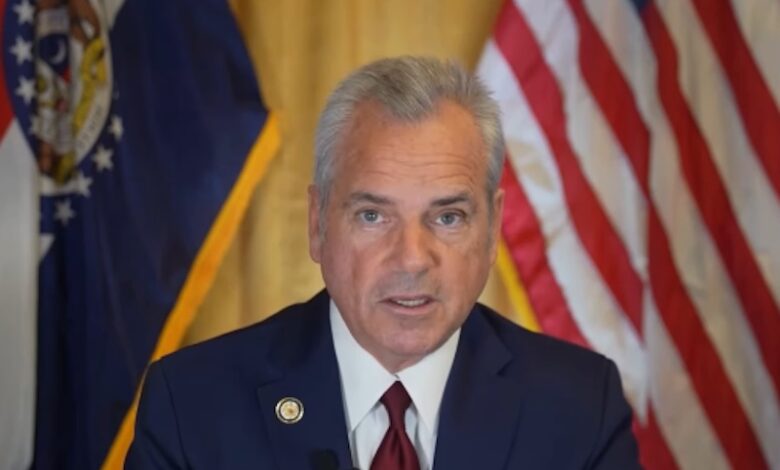
Missouri Rep. Mark Alford believes President Donald Trump has the necessary constitutional authority to take military action against Iran.
“Well, I think it was right to strike once again,” Alford told Up to Date on KCUR. “This was the time to take out the Ayatollah. Negotiations were not productive. The Iranians were not serious about reducing their enrichment and eliminating their capabilities and development of ballistic missiles, and so this was the right thing to do to try to restore democracy to Iran.”
The Congressman, who is serving his second term representing Missouri’s Fourth District, says the president is within his constitutional rights.
“The president has a solemn and constitutional duty to protect Americans and the homeland as commander in chief,” he said in an interview with CBN News. “In today’s dangerous world, that requires the authority to initiate limited strikes at a moment’s notice, authority which Article II of the Constitution clearly provides and that has been used by presidents of both parties for decades. At the same time, Congress maintains sole authority over full declarations of war.”
There has been a long-running constitutional debate over who has the authority to take the nation to war. Article I gives Congress the power to declare war and control federal spending. Article II designates the president as commander in chief of the armed forces. Lawmakers on both sides say the current Iran campaign highlights the tension between those two authorities.
Rep. Burgess Owens, R-Utah, describes the constitutional disagreement as a balancing act.
“Article I gives Congress the power to declare war and power of the purse,” he said. “Article II makes the president commander in chief. Our Constitution, therefore, grants shared but distinctively different responsibilities.”
The debate centers in part on the War Powers Resolution of 1973, passed after the Vietnam War over President Richard Nixon’s veto. The law requires presidents to notify Congress within 48 hours of deploying troops and limits military action without authorization to 60 days, with a possible 30-day withdrawal period.
However, presidents from both parties have questioned the constitutionality of the law, and the Supreme Court has never issued a definitive ruling on it. “The War Powers Resolution of 1973 presents thorny constitutional questions that should be adjudicated by the Supreme Court,” Alford said.
House Speaker Mike Johnson, R-La., has argued that a formal war powers vote is unnecessary at this stage. “It’s not a declaration of war,” he said. “It’s not something that the president was required, because it’s defensive in nature and in design and in necessity, to come to Congress and get a vote first.”
–Alan Goforth
#Trump #Iran #Congress #Constitution #WarPowers #MilitaryAction