
Venezuelan Church Leaders Hope for Return of Religious Freedom
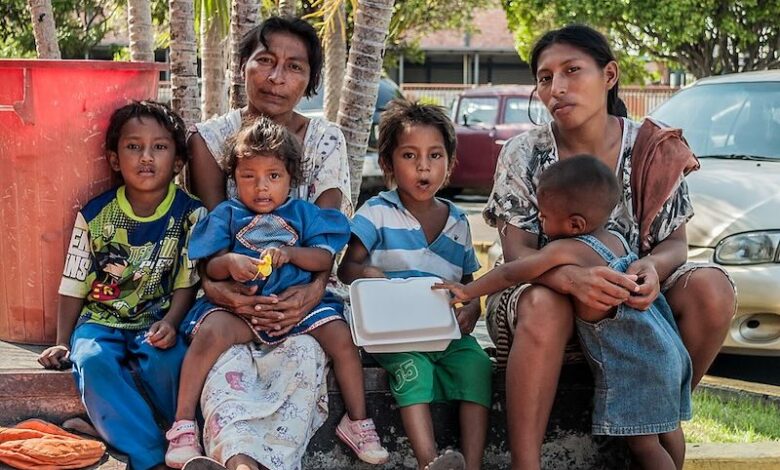
Church leaders in Venezuela and across the region are responding with a mix of prayer and guarded hope for freedom following the arrest of President Nicolás Maduro. His apprehension by the U.S. Department of Justice has stunned the country and reopened long-suppressed conversations about democracy and religious freedom.
Evangelical and Catholic leaders alike have stopped short of political declarations, but many say the moment underscores a deep longing among Venezuelans for stability after years of repression, economic collapse and state pressure on civil society – including churches that openly criticized the government.
José G. Piñero, president of the Evangelical Council of Venezuela, urged restraint while acknowledging the uncertainty gripping the nation.
“We extend our prayer and solidarity to all brothers and fellow citizens who are going through moments of uncertainty or fear,” Piñero said in a public statement. “We reaffirm our confidence in the sovereignty of God, who reigns over the nations and guides history according to his eternal purpose.”
Explosions, power outages, confusion in Caracas
The dramatic events unfolded before dawn Saturday, according to local pastors who described a city jolted awake by explosions and sudden blackouts.
“We were startled awake in the middle of our sleep early this morning by loud explosions,” Pastor Carlos Vielma, who leads a congregation in Caracas, told Christianity Daily. “We have no electricity or Wi-Fi. Of course, that at that hour of the morning leaves you in shock. I believe the first steps have been taken; some details and individuals still need to be identified.”
As of Monday morning, Elon Musk is offering free internet access to all Venezuelans through his Starlink satellite system, in a move to counter any efforts by Venezuela’s leaders to stop the spread of information.
Venezuela’s socialist government, which retained power after losing its last nationwide election, has released little information publicly, while U.S. officials have described the operation as the culmination of years-long efforts to hold Maduro accountable for alleged criminal activity and human rights abuses. Washington has long accused the socialist leader of using state power to silence dissent and entrench corruption.
Churches recall years of pressure under Maduro
For religious leaders, the moment is inseparable from a broader history of tension between churches and the Maduro government.
Over the past decade, Catholic bishops and evangelical pastors repeatedly warned of surveillance, harassment and retaliation after sermons criticizing corruption, food shortages and election practices. Clergy who spoke publicly against the government were accused of “political agitation,” while church-run humanitarian programs were at times subjected to increased scrutiny.
International watchdogs, including the U.S. Commission on International Religious Freedom, have previously cited Venezuela for restrictions on freedom of expression and assembly – conditions that religious leaders say affected their ability to operate independently and fulfill their duties under the Gospel.
While Piñero and others have avoided direct political language, their calls for prayer have been widely interpreted as appeals for protection of civil liberties. Fears are growing that the socialist government, with its institutions of repression still in place, could continue to harm pro-democracy proponents and stifle demands for freedom.
Regional churches call for peace and restoration
Religious leaders beyond Venezuela’s borders echoed those concerns.
The Evangelical Confederation of Colombia, representing churches in a neighboring nation that has absorbed millions of Venezuelan refugees, issued a statement urging believers to pray for stability and justice.
“CEDECOL calls upon all churches and believers to unite in prayer so that God may take control of the nation, bring freedom, peace, justice and restoration to His people,” the group said in a statement.
“We invite you to pray specifically that God will govern Venezuela with His wisdom and truth, guiding every decision made during this crucial time.”
Catholic leaders also struck a cautious tone. Pope Leo XIV expressed concern for ordinary Venezuelans caught in political upheaval, calling for restraint and reconciliation.
“The good of the beloved Venezuelan people must prevail over every other consideration,” the pontiff said in remarks released by the Vatican. “This must lead to the overcoming of violence, and to the pursuit of paths of justice and peace.”
Venezuelan bishops, in a separate message, urged calm and unity.
“In light of the events that our country is experiencing today, let us ask God to grant all Venezuelans serenity, wisdom and strength,” the statement said. “May our hands be open for encounter and mutual help.”
U.S. officials say democracy and religious freedom are linked
U.S. officials have defended their actions as necessary to restore democratic norms in a country where elections have been widely questioned and opposition voices suppressed. Supporters of the move argue that a return to constitutional order would strengthen freedom of religion by removing political pressure from churches and faith-based charities.
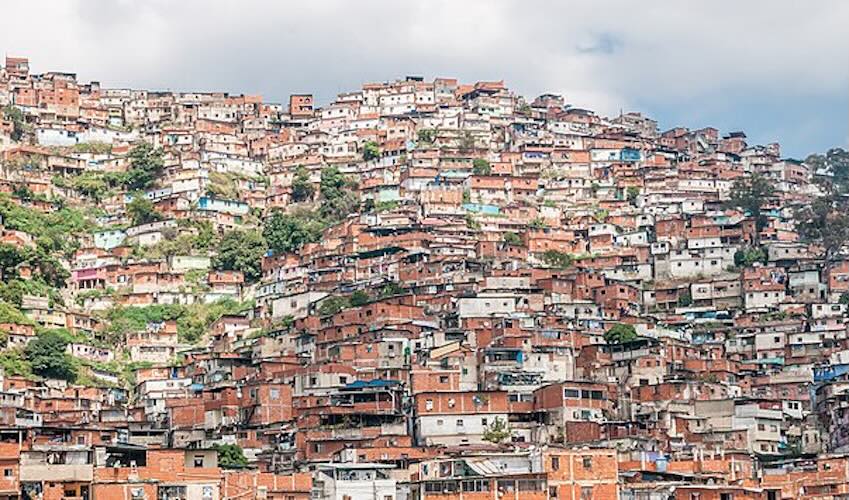
For now, Venezuelan religious leaders say their role is not to celebrate but to shepherd a population traumatized by years of political oppression. Countless citizens remain “disappeared,” dead or in prison at the hands of the socialist regime.
“Our responsibility is to pray, to serve and to protect life,” Piñero said in his statement. “History will judge the rest.”
• Relations between Venezuela’s churches and Nicolás Maduro’s government worsened over the past decade, according to reporting from religious groups and human rights organizations.
• Catholic bishops emerged as consistent institutional critics of Maduro, condemning corruption, disputed elections and the humanitarian crisis. • Government officials accused church leaders of political activity and, at times, limited church-led humanitarian aid.
• Evangelical churches reported increased monitoring of large worship gatherings and pressure to avoid public criticism of the government.
• Pastors who spoke openly about food shortages or repression said they were summoned by local authorities or subjected to administrative scrutiny. • International watchdogs cited Venezuela for broader restrictions on freedom of expression and assembly affecting faith communities.
• Religious leaders framed criticism in moral and humanitarian terms rather than partisan politics. • Church leaders say a return to democratic governance would reduce state interference and allow churches to operate without fear of reprisal.
–Dwight Widaman | Metro Voice and News Research Assistant Luke