
Walking the Stones and Reading the Word
A List of Biblical Discoveries That Mattered in 2025
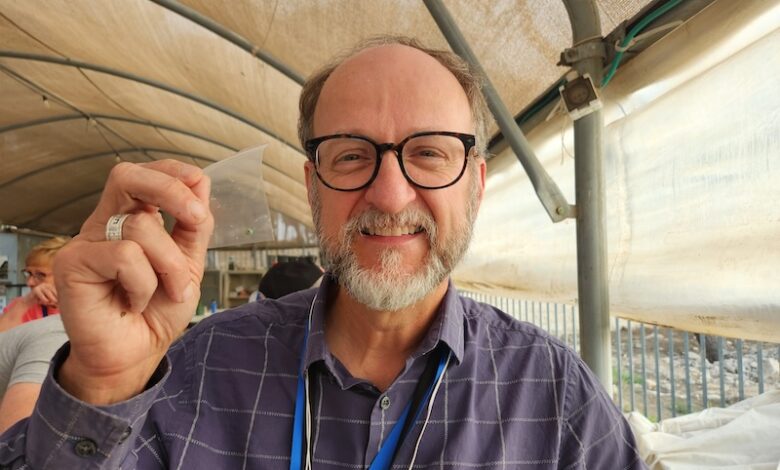
I came home from Israel in November with limestone dust still clinging to my shoes and a tour notebook full of scribbles – some fascinating facts shared by our tour guide Malkah, impressions of what I saw, and spiritual insights from Troy–our teaching pastor for the tour. I also had a few stones in my luggage and more than a few questions I hadn’t expected to be asking.
After years of leading Heartland to Holyland tours with my wife Anita, I’ve learned that being in the land, with its history and archaeology, may contradict some things we’ve been taught. Our tours are not Sunday school “felt board” lessons – those simple Bible stories stripped down to bare essentials and often devoid of deeper meaning. We try to go deeper. Get to the truth. Connect the dots to scripture. It can open our eyes and our hearts.
So much of what is taught in churches today gets it wrong, or at least doesn’t come with the correct understanding of the context of the land, geography, and history of the Bible, or the early beginnings of Christianity.
A proper understanding complicates things. It slows you down when you are in a land so deeply connected to scripture, whether Israel or following the footsteps of Paul through Greece and Turkey, which we also did with a group this fall. And often it forces better questions than the ones you came with. But the answers always provide a richer and deeper understanding of scripture, even words and phrases we often overlook or otherwise take for granted.
So it is with archaeological discoveries this year. Some made headlines. Who doesn’t like stories of evidence of battles described in the Bible? Others quietly change our perceptions, offering greater insight and appreciation for Biblical stories, but don’t get a mention on the nightly news or the news feed on your phone.
2025 was one of those years.
Some discoveries were dramatic – gold coins, an ancient wine jar near the site of Jesus’ first miracle at Cana, spearheads of an invading army, and amazingly huge engineering projects in Jerusalem. Others were quiet: seeds pressed into soil, broken pottery, roads reconstructed on computer screens. All of them, in different ways, shaped how I talk about Scripture and its visible evidence in the land or when I gather our groups together around our tour guide in the shadow of Jerusalem stone or to hear a message on the top of the Mount of Precipice.
What follows could be seen as a list of “proofs.” Ultimately, though, we know in our hearts the validity and accuracy of the Bible. This is a list of what I believe mattered this year and how they change perceptions.
1. An Assyrian Cuneiform Inscription in Jerusalem
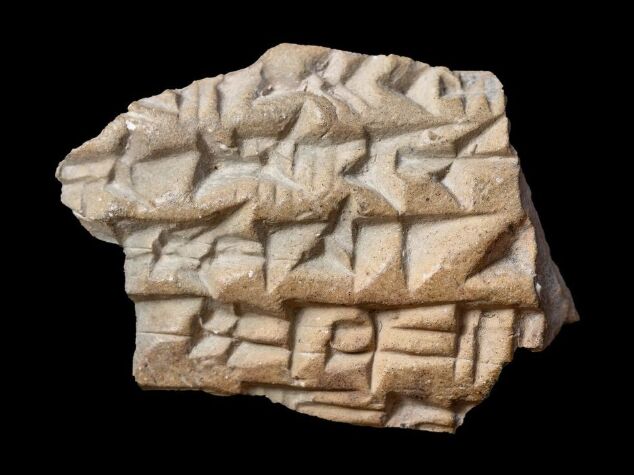
In October of 2025, a tiny pottery fragment inscribed in ancient Akkadian cuneiform was unearthed in Jerusalem. Why did it make even seasoned archaeologists stop in their tracks? It was found at the Temple Mount and dates to the 8th century BC, representing the first Assyrian inscription ever discovered in Jerusalem. It’s a message from an Assyrian king to a Judean king who is not mentioned, but is likely either King Hezekiah or his son King Manasseh.
We typically spend 6 days (out of 10) in and around Jerusalem on our tours. When we stand at the overlook of the City of David, peering down into the ancient capital with the Mount of Olives in the distance, we are reminded that Judah didn’t exist in isolation. This shard confirms the biblical story that Israel faced pressure from the most powerful empire of its day. The bible story wasn’t written void of a connection to its surroundings or current events of the time, and it sharpens the prophetic warnings in Isaiah and Kings.
2. The Monumental Siloam Dam
When you think of the Pool of Siloam, you naturally think of the story of Jesus and the healing there. Excavations have truly exposed the true size of the site. Previously on tours, we would only see three steps that would have led down to the water. Now we can see the bottom of the pool and how it extends under 60 feet of debris that had been piled on over the millennia since the destruction of Jerusalem in 70 AD. Today, the ongoing excavations that we saw reveal a massive dam. Radiocarbon tests date it to even before the time of that Assyrian message above. Excavations in the City of David show it to have been built centuries before Hezekiah’s famous tunnel.

Excavator Dr. Nahshon Szanton called it the largest ancient dam ever found in Israel. Standing there in November, I was reminded of how water, a precious commodity in the Holy Land, shaped the ancient biblical narrative. It still does. Our tour should have experienced a few rainy days and cool temperatures. But it was unseasonably warm and dry in November. The day after we returned home, the skies opened up and the country was drenched. And the people rejoiced.
3. Egyptian Military Evidence at Megiddo
When we are in the north of Israel, we get spectacular views. One of those is of the Valley of Armageddon. In that valley are the remains of ancient Megiddo. There on the tel (or hilltop made up of ages of ruins), pottery shards were recovered that confirm in the 7th century BC an Egyptian military presence existed. Amazingly, this is at the time King Josiah was killed in battle by Egyptian Pharaoh Necho II, as chronicled in 2 Kings 23.
4. A Clay Egyptian Seal Bearing a Biblical Name
One of the favorite activities of our group members is allowing them to serve as archaeologists at the Temple Mount Sifting Project. The materials are from the First and Second Temple periods. On this trip, while our guests sifted in groups of 4 or 5, I came across a little bead with a hole through it. It was rare enough that the head of the site came to photgraph me holding it, as well as had me sign documents that it was discovered, before it was taken away.
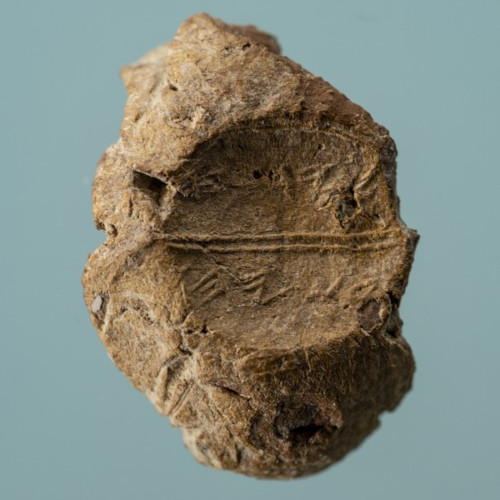
But what was really amazing earlier this year is that at that same sifting site, a small clay seal (bulla) reading “Belonging to Yed[a’yah], son of Asayahu” was discovered. You might miss it whenever it makes it to a museum display case. But on this little piece of clay, used to officially “seal” a document, is the name given in the Bible of a palace official in King Josiah’s court.
According to Zachi Dvira co-founder of the Temple Mount Sifting Project, finds this legible are rare. When our tour guide Malkah reads biblical lists of officials to our tour groups, this is the world I want them to picture – documents sealed, Kingly authority exercised, decisions made quietly long before prophets ever raised their voices.
5. The Megiddo Mosaic and Early Messianic Identity
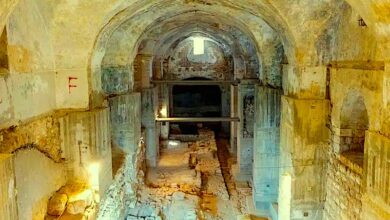
Public display of the Megiddo Mosaic in 2025 renewed attention on its inscription referring to Jesus as divine. While marketed as the world’s earliest church, scholars believe it was likely a synagogue setting where both Jews and Gentiles worshipped Jesus as the Jewish Messiah together.

Archaeologists and Bible scholars continue to debate its implications. Indeed, it is a fantastically important find (though it wasn’t discovered this year, only made viewable to the public), but the Museum of the Bible faced criticism for a lack of context, as well as having moved it thousands of miles, at the risk of destroying its fragile tiles.
My takeaway is this: The museum did a great public service of making it available to the public, but in my chats with those responsible for it, they admitted it could have had a better context that did not erase, or at least did not gloss over, the importance of early messianic Jewish believers in Jesus sitting in community with gentile believers.
Many experts say it wasn’t a “church” as we understand a church to be 2,000 years after Jesus. If the dating of this building and mosaic floor is correct, it was during a time when belief in Jesus remained fully embedded in a broader Jewish context and worship experience, and before the great “schism” which divided the two communities. Regardless, I was anxious to see it and the excitement it brought to others.
6. A Garden Beneath the Holy Sepulchre
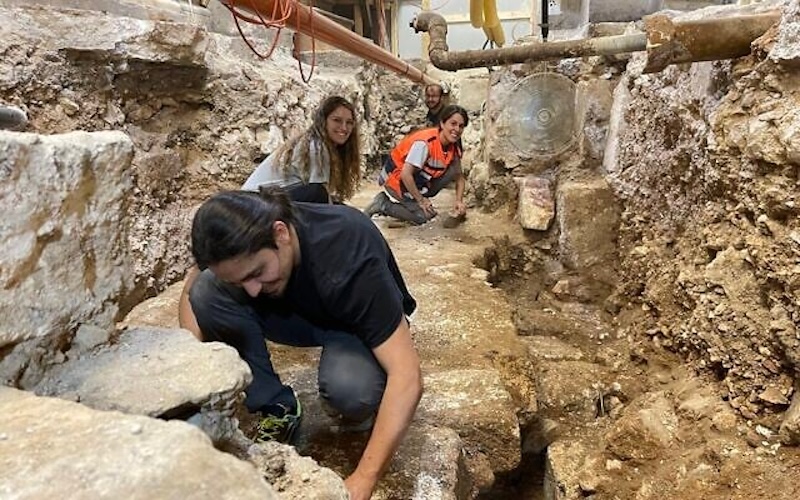
Just feet away and a floor below where our tour guests explored the Church of the Holy Sepulchre, archaeologists uncovered olive pits, mummified grape skins, and seeds dating to the time of Christ. We tell our guests that archaeology, geography and scriptural references point to this church as being on the site of the crucifixion and resurrection.
While lead archaeologist Francesca Romana Stasolla was careful not to draw overt theological conclusions, the discovery connects to the Gospel of John, which describes a garden near the crucifixion site. This garden discovery makes it plausible because it would have existed before the destruction of Jerusalem and Hadrian’s reconstruction of the city into a Roman capital. For me, it was exciting as it underpins the biblical story.
7. Colossae’s Necropolis
While our September Steps of Paul tour of Greece and Turkey did not make it to the interior city of Colossae, a discovery there brought it to my attention. Unearthed were 60 rock-cut tombs dating back more than 2,000 years–well before the time of Paul. Many personal items like lamps, coins and pagan idols were found.
Paul’s letter to the Colossians suddenly feels less abstract to me. He was telling this community of new Christ-followers to stay away from idols and to realize Jesus was all they needed. When you read what was discovered there by archaeologists, we realize that the early community of believers was surrounded by long-established pagan burial traditions. Paul wasn’t writing his warnings and encouragement in a vacuum. The discovery shows the context of the time his letters were written.
8. A Canaanite Flint Blade Factory
When the Israelites entered the promised land, they were not confronting a ragtag group of gangs but a well-oiled military machine that had gone to war with Egypt for 400 years. A discovery this year at Kiryat Gat, near the ancient city of Lachish, shows the Canaanites possessed an industrial-scale production of flint spearheads as early as 5,500 years ago. This discovery of a military equipment factory helps explain why it took Joshua seven years to conquer the land.
Biblical peoples were not primitive and Israel faced a mighty military nation when they crossed the Jordan. Yet, God’s faithfulness in equipping the Israelites prevailed.
9. Roman Roads Digitally Reconstructed
A new digital database reveals the massive complexity of the Roman highway system. This comprehensive digital map outlines 186,000 miles of Roman roads and clarifies for us how efficiently the empire could conquer and keep people under control in subdued nations in far-off lands. More importantly for us, it shows how the roads contributed to the spread of the Gospel across the Roman empire-even as far away as the northern British Isles, Portugal and deep into the Nile River Valley.

The Apostle Paul wasn’t wandering randomly on his many journeys. Neither were the countless missionaries spreading the Gospel after him. They were moving along state-of-the-art infrastructure designed for control, commerce, and speed just like the reasons America’s interstate highway system was designed and expanded beginning in the 1950s – 2,000 years later.
It made me ask myself, “What roads am I willing to take in sharing the Good News?”
10. Ivory Trade Networks and Solomon’s World
We know that Solomon was a very rich man. Now, a scientific analysis at 46 sites in sub-Saharan Africa tells us just how rich. Unearthed ivory artifacts in Israel can now be traced back to those sites in Africa, illuminating long-distance trade under the former world’s richest man. The trade was so established that it lasted for over 1,000 years.
Dr. Harel Shochat from the University of Haifa, the lead author of the paper published in the November 2025 issue of the Journal of Archaeological Science, says it was a very “eventful millennium.” He says the trade routes discovered are consistent with the biblical narratives about that period. That includes, as The Times of Israel reports, “the Queen of Sheba’s visit to King Solomon in Jerusalem, bringing opulent gifts.”
The trade routes survived multiple conquests, the collapse of civilizations, slavery, and expulsion, all the way to the Babylonian captivity and return. The archaeologist says, “The [ivory] network did not change despite all kinds of geopolitical fluctuations and changes in the social structure.”
Through all that, the commerce survived. It goes to prove the adage is as relevant today as it was then in terms of war and conquest–follow the money.
11. A Church Mosaic at Olympos
Archaeologists in Turkey uncovered a beautiful and ornate mosaic floor. It was part of a 5th-century Byzantine church. One of the mosaics read: “Holy, holy, holy! In the name of Jesus Christ, Son of God!” It’s a vivid reminder of earlly Christian liturgy but it doesn’t sound exotic, does it? It sounds very familiar to modern ears and I find it shows the continuity of our faith over the centuries. And that matters. When we’ve taken our groups to Turkey and Greece, there’s an element of familiarity. These were where the first Christian communities flourished during and after the life of Paul. There’s much comfort in that.
12. Negev Tombs and Trade Routes
In 2027, we are leading the “Paths of the Patriarchs, Prophets and Kings Tour.” Part of it will be spent in the Negev desert, as the Israelites who “spied out the land” would have seen it. The area, which includes the Wilderness of Zin, is breathtaking. Recently, tombs containing Egyptian scarabs and silver jewelry were discovered. The find confirms that the area was a crossroads of commerce as caravans crisscrossed the region connecting Egypt to eastern lands. But the finds also point to a continual presence in the area and underpin their reference in scripture.
13. AI and the Dead Sea Scrolls
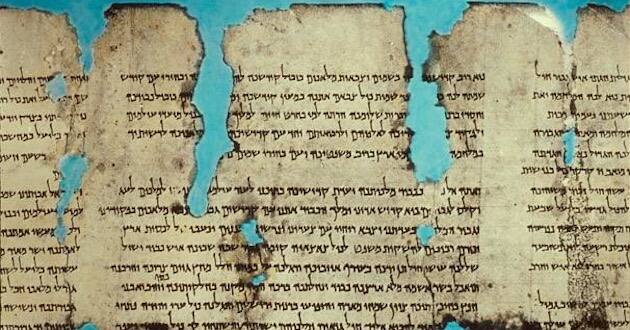
Scholarly critics have long told us that much of the Old Testament was passed down orally. “How can we be confident in the facts if they are only passed down from generation to generation by word of mouth?” they ask. In recent years, several things have challenged that notion, indicating the Israelites were writing down the narrative in the Bible much earlier than believed. One example is the Mt. Ebal lead tablet dating to the time of Joshua. We actually take our groups to Joshua’s Altar and the fact the tablet was found there is spine-tingling. The tablet quotes the curses “Cursed by the god YHW, cursed. You will die, cursed – cursed, you will surely die…” just as Deuteronomy records.
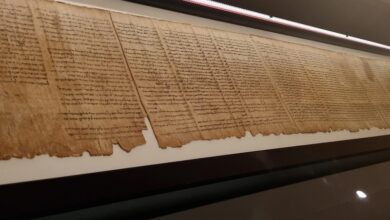
Fast forward to 2025 and AI is being employed to help read and date the Dead Sea Scrolls as we previously reported. What it has discovered through its machine-learning analysis suggests some scrolls are older than we ever knew. The scrolls were already believed to be the oldest examples of scripture (until the Ebal lead tablet). Now we know they are older than the doubters said, meaning the old theory of orally passed down “traditions” is going out the window. Ancient scribes, whether in Joshua’s day, having just ended 40 years of wandering in the wilderness, or the final books of the Old Testament like Ezra, Nehemiah and Malachi, have written records of events, not just oral tradition.
There remain a lot of questions in the Christian community about AI and its abilities in relation to faith. In this instance, technology isn’t replacing biblical scholarship. It’s sharpening it – and challenging long-held assumptions held by those who don’t believe the Bible.
14. Wine Jars and the Wedding at Cana
One of the most well-known and most quoted miracles of Jesus is the turning of water into wine at a wedding in Cana. In 2025, archaeological attention focused on the ancient town Khirbet Qana (see the connection: Qana–Cana?).
Here, archaeologists unearthed stone jars, just as described in John 2. Interestingly, the site isn’t where Medieval tradition places it. Modern-day Cana, of course, has a little church that commemorates the miracle, and we have visited there on our tours. But the latest discoveries point to the actual site being neaeby. Researcher Dr. Tom McCollough says the new site provides “compelling evidence” for being the place of the miracle. In reporting the discovery, the archaeologist reports that the discovery of the cellar/cave includes a shelf with one large stone vessel and a space for five others, matching the six stone jars described in the Gospel. It also aligns with first-century Jewish practice, which would have used stone, as opposed to clay, because stone did not become ritually impure. I love how scripture is often strikingly specific in its descriptions: Six stone jars.
Of course, proof may prove elusive. But for me, it gives material evidence that creates a vivid, even tangible, connection to a story we all know by heart. Now, as with any of these discoveries, we may be able to touch it with our hands.
A final note
All these developments have special interest to me, and perhaps they excite your curiosity as well. As someone who takes scores of people on biblical trips in search of the roots of our faith each year, I find that archaeology doesn’t prove faith – it grounds it. Stones don’t preach sermons, but they do testify to the truth of events found in the Bible we love and cherish. We need to pay attention to these discoveries. These stones, these discoveries, don’t talk to us all at once. They do talk to us persistently. For those of us who love the Bible, history and archaeology, they help us follow the thread of faith through ancient lands, and that persistence of archaeology matters.
I’m excited about what the new year will bring.
If you would like to join us on a future tour, find info HERE.
–Dwight Widaman | Metro Voice and Heartlandtoholyland.com