
When Church Doesn’t Feel Safe for Disabled Families
How One Family’s Experience Led to a National Ministry
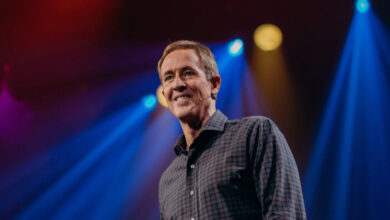
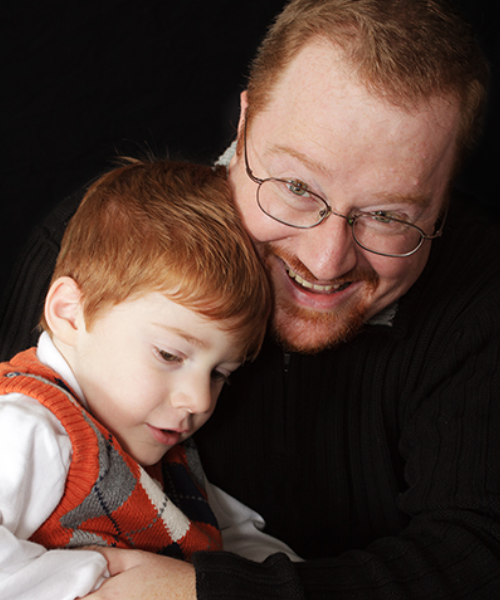
Dr. Stephen “Doc” Hunsley remembers the stares.
His young son, Mark, was different, but people didn’t know that just from looking at him. Mark had Dravet Syndrome—a rare form of epilepsy—and profound autism, which often led to unpredictable behavior in public.
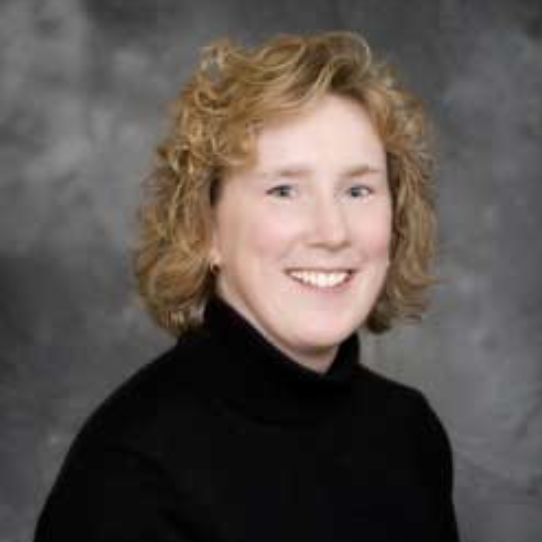
“We would always get looks,” Hunsley, a Kansas City area resident, tells Metro Voice. He and his wife, Dr. Kay Hunsley, and their family would even get stares in church, a place that is supposed to be welcoming.
“I can’t tell you the number of times we’ve had complete strangers tell us that we’re not just bad parents, we’re horrible parents,” Hunsley says. “And we got that a lot at church. Instead of having love given towards us, we had hate because we were different and he didn’t fit in.”
The Problem and a Vision
Hunsley’s family is unfortunately not alone in their experience.
One in four American families have a member with a disability. Nearly 80% of those families don’t attend a church.
Almost a third of families say they’ve left a church because their child with a disability wasn’t welcomed or included. Even more have refrained from participating in a religious activity.
Hunsley set out to do something about those staggering statistics. Mark sadly passed away at the age of five. Months later, Hunsley founded SOAR, which stands for Special Opportunities, Abilities, and Relationships, a non-profit that comes alongside churches to better care for and serve families and individuals with disabilities.
Through SOAR, Hunsley has equipped more than 800 churches in the United States—plus 26 countries—with the training, education, programs, and tangible changes needed to be more welcoming and accessible to families with disabilities.
Expectation vs Reality
The majority of pastors and churchgoers claim their church is welcoming to people with disabilities. Data shows, however, that few actually take steps toward inclusivity and accommodation.
Hunsley shares the pushback he received as the children’s pastor of his church when he wanted to start a special needs ministry. “[The senior pastor] immediately turned to me and said, ‘Doc, no. I don’t want those kinds of people here.’”
His experience reflects a broader lack of inclusion nationwide.
According to Lifeway Research, most churches (over 70%) encourage people to volunteer and participate in disability-related events such as Special Olympics and provide financial support for families. But that often isn’t enough. Only 50% of churches provide an additional teacher or helper for a child who needs it. Less than half offer events and classes specifically for people with disabilities. More than 80% don’t have a dedicated special needs ministry at all.
A year after Hunsley’s interaction with the pastor, he had a similar experience further highlighted the often unwelcoming attitude churches have toward disability.
Read: Joni and Friends spearheads effort to protect disabled
“That pastor called me back into that office a year later because we had three adults with disabilities who became too vocal for his message and they were distracting to him…[H]e asked me to get rid of them.”
Instead of asking the families to leave, Hunsley talked to them and created a Sunday school class for adults with disabilities. The class quickly grew from three members to more than thirty.
Practical Steps
There are two main types of barriers people with disabilities frequently face: functional and social. Functional barriers involve a person’s physical or sensory limitations—walking, hearing, processing, etc. Social barriers include others’ negative assumptions and treatment of people with disabilities, and the general stigma surrounding disability.
Churches can begin with practical changes: accessible entrances and bathrooms, sensory-friendly rooms and stress-relieving tools, and ASL interpreters or Braille/large print materials as needed.
The social barriers can be mitigated through training church leaders, educating the congregation, and supporting the individuals with disabilities both in and outside of church.
But inclusion and accessibility are not one-size-fits-all. According to Crossway.org, churches should meet the unique needs of every individual and recognize that every person with a disability is different, even two people with the same disability.
Hunsley encourages that churches don’t have to do it all from the beginning. “Start small. Start with where you’re at….There are so many different diagnoses and disabilities. You don’t need to worry about everything. Just start with the people you currently have in your church and meet their needs and do it well. And as you do that well, you will grow over time.”
Ultimately, inclusivity starts with love. “You don’t need to be an expert in understanding autism or Down syndrome or cerebral palsy,” Hunsley says. “You just have to be a friend.”
The Impact of Inclusive Churches
A church that prioritizes the needs of all its members, especially those with disabilities, benefits more than just the individual. The other family members and the church body are impacted, too.
One way SOAR serves parents of children with disabilities is through monthly respite nights, where families get a break from all the extra care that often comes with raising a child with a disability. “The divorce rate is higher [among families with disabilities] than the general population,” Hunsley explains. “We’ve had countless families tell us…doing the respite night has saved their marriage.”
In a video on SOAR’s YouTube channel, Holly Palacio, a SOAR parent, shared how the ministry affected her family. “We had not only a destination for Michael that he was so excited to go to,” Palacio said of her son. “but we had another community of people who loved Michael for Michael, who see him as a person, not a diagnosis, and who wanted to support our family.”
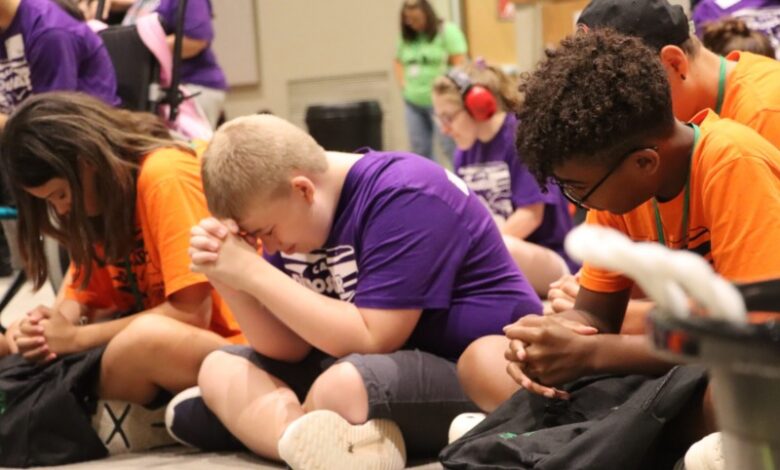
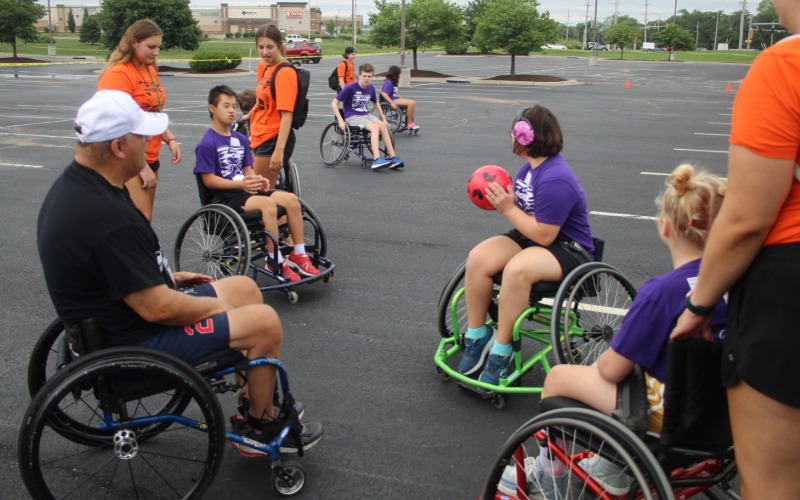
Another way SOAR impacts people beyond the individuals is through its day camp, where churches often send their student ministries to volunteer.
“These students come, they serve with us, “ Hunsley says. “They work with individuals with disabilities for a week. They fall in love with them. They’re on fire. They go back to their church and they’re ready to pour into the disability ministry at the church. And then we see that church grow.”
But the biggest and most important impact ministries like SOAR have is bringing people to Jesus. “We’ve had hundreds of individuals with disabilities who have accepted Christ…who probably would not have been able to do that before.” Hunsley says. He shares a story about a teenager SOAR served.
“People were saying, ‘well, I don’t know if he understands baptism, and ‘we shouldn’t do it.’ And I said, ‘he totally gets it. I’ve talked with him, he understands this.’”
When the young man came out of the water, Hunsley shares, he threw his hands up in the air like a referee signaling a touchdown.
“Touchdown for Jesus!” the teen screamed.
“And the church exploded and just went crazy,” Hunsley remembers with joy. “He got it.”
–Lyra Thompson | Metro Voice
For more information about SOAR or to start a special needs ministry at your church, visit soarspecialneeds.org
Image credits: soarspecialneeds.org
#DisabilityMinistry #SpecialNeedsMinistry #ChurchInclusion #SOARSpecialNeeds #AutismAwareness #DisabilityInclusion #FaithCommunity #AccessibleChurch #ChristianMinistry #KansasCity