

Evangelical churches gain ground across Brazil’s Amazon
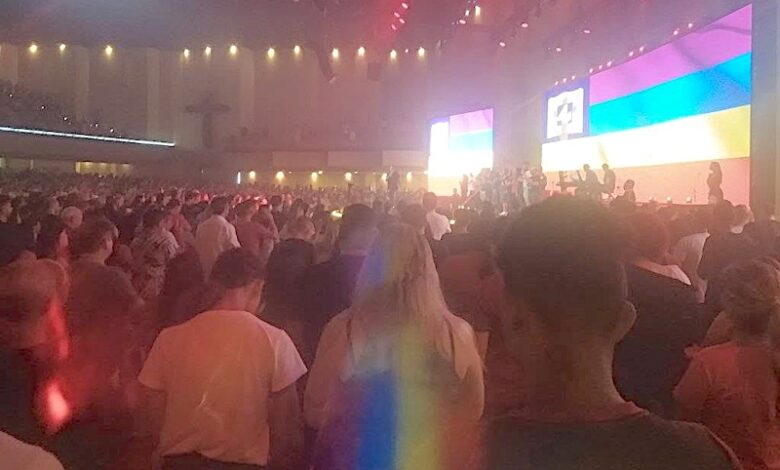
Like the Amazon rainforest, Evangelical churches are putting down roots across Brazil’s interior, traveling by boat to riverside settlements and training local pastors to remain after visiting missionaries leave.
The results are visible in Brazil’s latest census. Evangelicals account for 36.8% of northern Brazil’s population, the highest share of any region, according to 2022 census findings released in June 2025. In Acre and Rondônia, they now outnumber Catholics.
Nationwide, 47.4 million Brazilians age 10 and older, or 26.9%, identified as evangelical, up from 21.6% in 2010. Catholics, who once numbered 65.1%, are still the largest group at 56.7%.
Pastor Josué Bengtson, a longtime Foursquare Church leader in Pará, remembers when reaching an isolated town could require hours on foot.
“Back when we started evangelizing in this region, we had just a few workers and, in some municipalities, pastors had to walk 10 to 15 km to open a congregation,” he told CBN News in an interview first reported in 2024.
Missionary Esequiel Santo spent 32 years working in the Amazon’s interior. Isolation and adapting to life among Indigenous and riverside communities were difficult, he says.
“We saw lives being transformed,” Santo said. “So many people heard the gospel and now we are seeing the fruits.”
The Catholic Church has acknowledged the distance problem. The Vatican’s 2019 Amazon synod found that some communities wait months, occasionally years, for a priest to return to celebrate the Eucharist or other sacraments. Evangelical congregations often appoint leaders who already live nearby.
The growth is not confined to the jungle, as Metro Voice has reported over the years. A São Paulo Research Foundation study found that 6,356 evangelical churches opened across Brazil in 2019, an average of 17 each day.
President Luiz Inácio Lula da Silva’s government has partnered with religious organizations on hunger relief, job training and small-business programs. But there is no evidence it has financed church planting in the Amazon. That movement began decades before Lula returned to office in 2023.
–Dwight Widaman | Metro Voice