

Why the Number 10 Represents Order, Completion, and Human Aspiration
We count, rank, and score our lives in tens, but beneath this familiar number lies a rich symbolic history and a profound paradox about life itself.
Some numbers feel accidental, random even. Others feel inevitable. Among the latter, few possess the quiet authority of the number 10. It appears so naturally in human life that we scarcely notice how deeply it shapes our thinking. We count in tens, organize in tens, rank in tens, and measure completeness by tens. A “perfect 10” requires no explanation.
A Universal Pattern
Yet this familiarity may conceal something more profound. For beneath its everyday usefulness, the number 10 carries a rich symbolic history. Across mathematics, religion, philosophy, and culture, it has come to represent order brought to completion—not merely the ending of a sequence, but the establishment of a stable and intelligible whole.
If 9 stands at the threshold of transformation, then 10 feels like arrival: the moment when the parts finally cohere into a recognizable structure. Part of this significance arises from the human body itself. We possess ten fingers, and it is difficult to overestimate how much this simple fact has shaped civilization. Our decimal system almost certainly emerged from counting on the hands. Tens became natural units of measurement because the body itself supplied the model.
In this sense, 10 is deeply human. It bridges the abstract world of mathematics and the physical reality of embodied life. We quite literally carry the number with us. And perhaps this is why it so often signifies not merely quantity, but mastery. To “count to ten” is to regain composure. Top 10 lists imply distinction; pop records are only really considered hits when they make the top 10. Management surveys routinely ask us to rate performance, satisfaction, or likelihood on a 10-point scale; and the famous customer question—“How likely are you to recommend …?”—is the Net Promoter Score, or NPS, and uses a 0–10 scale. A perfect score is commonly marked by 10. The number suggests not excess, but proportion, a condition in which things have reached their proper form.
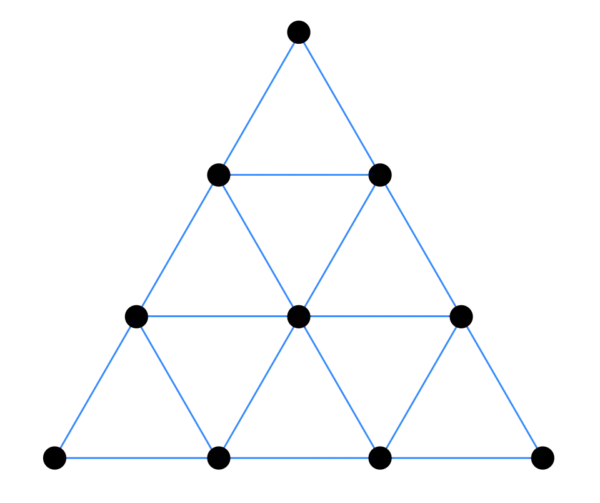
This instinct appears repeatedly in ancient thought. The Pythagoreans regarded 10 as the most perfect of numbers, represented by the tetractys: a triangular arrangement of 10 points, formed by adding one, two, three, and four together. To them, the tetractys reflected harmony itself—the hidden numerical structure underlying music, geometry, and the cosmos. They swore oaths by it.
This was no mere superstition. The Greeks sensed that order was not arbitrary. Reality possessed pattern, symmetry, and intelligibility. Ten represented the completion of that pattern: Unity unfolded into fullness.
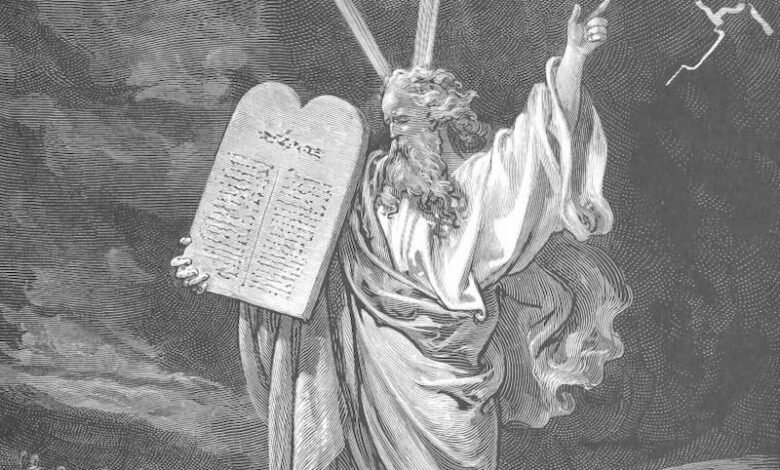
The same idea appears in religious traditions. In the Hebrew scriptures, there are the Ten Commandments: not suggestions, but foundational principles intended to order both individual conduct and communal life. Significantly, there are 10 of them—not seven, not 12. The number conveys sufficiency. Together, they form a complete moral framework.
Likewise, in the biblical story of Egypt, there are 10 plagues before liberation occurs. The sequence is not random; it unfolds as a total judgement upon a corrupt order. Only after the 10th plague does a new chapter begin. This pattern appears even in biblical genealogy: Genesis presents 10 generations from Adam to Noah, and another 10 from Noah to Abraham, suggesting that history unfolds in ordered stages rather than random succession.
In Hindu tradition, Vishnu is classically associated with 10 avatars, manifestations appearing across the ages to restore cosmic balance. Here, too, 10 carries the sense of completeness—not as immobility, but as the full unfolding of order through history.
In Christianity, the number appears again in Christ’s parables. The parable of the 10 virgins depicts readiness and preparedness in the face of an approaching moment of reckoning. Ten functions here as the complete body awaiting decision: some prepared, some not.
The Paradox of Perfection: Completion Without Permanence
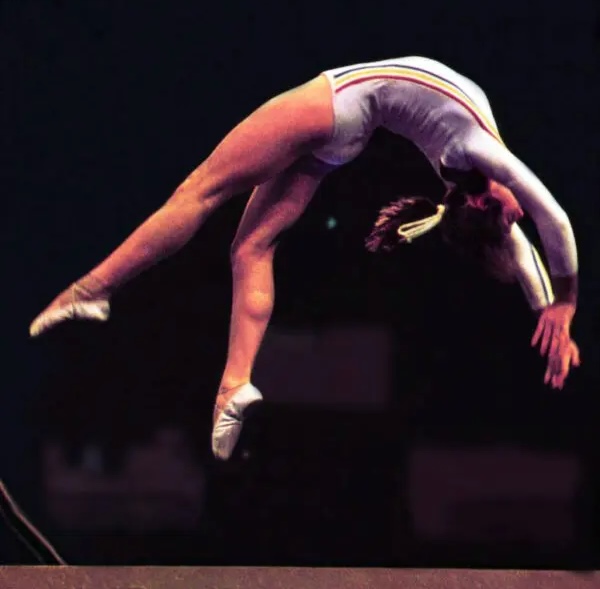
Even outside explicitly religious contexts, the symbolic force of 10 persists. In sport, the number is often associated with leadership and creativity. The “number 10” shirt in football traditionally belongs to the playmaker, the figure through whom the game is shaped and ordered. Think Pelé, Maradona, Messi, and Platini. In gymnastics and diving, a 10 represents flawless execution, the ideal realized without visible defect. Think Nadia Comaneci!
And yet the number also carries a subtle warning. For perfection, once achieved, can tempt us toward rigidity. Systems that become too complete may resist renewal. Structures designed to bring order can harden into forms of control. The desire for a perfect score, a perfect society, or a perfectly ordered life may conceal an inability to tolerate uncertainty or change. Indeed, the Ten Commandments, as wonderful as they are, became in the hands of the Jewish Sadducees, Lawyers, and Pharisees, the very blocks to life that Christ challenged.
In this respect, 10 differs from 9. Nine remains dynamic, poised at the edge of transformation. Ten, by contrast, seeks settlement. It wants things arranged, clarified, and secured. This is both its strength and its danger.
Human beings need order. Without it, life collapses into confusion. Language, law, architecture, music, and science all depend upon stable structures. Civilization itself requires frameworks capable of enduring through time. Yet life also exceeds every framework we create. The moment we believe we have achieved final perfection, reality has a habit of reminding us otherwise. New problems emerge. Unexpected questions arise. Human beings change. History moves on.
Perhaps this is why the number 10 often marks not merely an ending, but the beginning of a new cycle. In arithmetic, once we reach 10, we return to 1, but at a higher level. The sequence recommences, yet it does not simply repeat. Something has been carried forward.
Ten, therefore, embodies a paradox. It symbolizes completion, but not permanence; achievement, but not final arrival. Perhaps the condition of life itself, at least here on Earth.
The ancient Greeks understood this better than we sometimes do. Their word cosmos meant not merely “the universe,” but an ordered and beautiful arrangement (hence our word “cosmetic”). Order mattered because chaos always threatened to return. Harmony was something to be maintained, not assumed, as in our daily lives, using cosmetics to make up the face suggests order: Beauty needs to be maintained.
Our own age often swings uneasily between these two poles. On the one hand, we hunger for order: clear systems, measurable outcomes, stable identities. On the other hand, we fear becoming trapped within systems too rigid to accommodate the unpredictability of life.
The number 10 quietly reminds us that true order is not mechanical. It is living. A good structure does not imprison energy; it channels it. A good society does not eliminate freedom; it enables flourishing. A good life is not one in which every uncertainty has vanished, but one in which purpose and openness coexist.
This may explain why 10 continues to resonate. It speaks to one of the deepest human desires, the hope that life can be brought into meaningful shape. Not perfect in the sense of frozen or flawless, but complete enough to stand, endure, and serve as the foundation for what comes next. For ultimately, the significance of 10 lies not in the number itself, but in what it reveals about us. Namely, human beings are creatures who seek order amid mystery.
We count, classify, rank, measure, and build because we long to discover patterns that make existence intelligible. Ten has become one of the great symbols of that longing. It is the number that tells us the pieces can fit together, even if the story itself is not yet finished.
By James Sale