
Dead Sea Scrolls inspire Muslim scholar to respect Jewish people, work for peace
Despite seemingly never-ending conflict in the Middle East, not every Muslim opposes Israel’s right to exist.
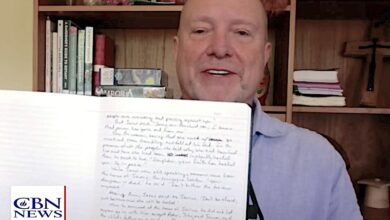
“I have spent years advocating for peace and reconciliation between Muslims and Jews,” said Loay Alshareef, an Arab Muslim peace advocate, linguist and senior fellow at the Macdonald-Laurier Institute, according to CBN News. “And I have never understood why acknowledging the ancient Jewish connection to this land should be considered threatening to Muslims.”
READ: History affirms Jews have claim to Holy Land, author Dinesh D’Souza says
Born and raised in Saudi Arabia and now based in Abu Dhabi, he is a leading Arab voice for the Abraham Accords and Muslim-Jewish reconciliation.
“The Dead Sea Scrolls have fascinated me for years, not only because of what they tell us about Judaism and the biblical world but because of what they tell us about one of the most disputed questions in the Middle East today: the historical connection of the Jewish people to the land of Israel,” Alshareef said. “In fact, I believe the Dead Sea Scrolls are one of Israel’s greatest defenses of its legitimacy — far more powerful than the Iron Dome or F-35. The scrolls demolish one argument that has become increasingly common in parts of the Arab and Western worlds: the claim that Jewish attachment to the land is a recent political invention created by Europeans in the 19th or 20th century.”
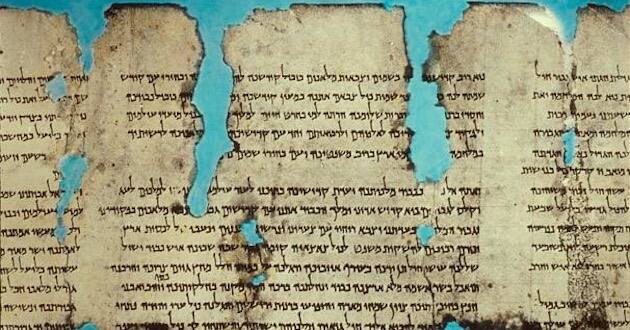
In 1947, Bedouin shepherds discovered ancient manuscripts in caves near Qumran, close to the Dead Sea. Over the following years, additional caves were discovered containing thousands of fragments representing hundreds of manuscripts dating from the final centuries before the first century A.D. They were written by Jews living in this region more than 2,000 years ago.
“As someone fascinated by languages, manuscripts and the history of religion, I find that extraordinary,” he said. “It also places the scrolls remarkably close to another historical world that has always fascinated me — the world of Jesus. Jesus was a Galilean Jew born into the religious environment of Second Temple Judaism in Bethlehem. The scrolls give us an extraordinary window into that broader environment.”
There is something meaningful to Alshareef about the idea of an Arab Muslim studying ancient Jewish manuscripts in Israel.
“For Muslims in particular, recognizing the Jewish people’s ancient connection to this land should not frighten us,” he said. “It does not diminish Islam, and it does not require denying Palestinian identity or Palestinian suffering. It simply requires intellectual honesty. The Dead Sea Scrolls spent almost 2,000 years hidden in caves. When they finally emerged, they brought with them the voices of an ancient Jewish world.”
–Lee Hartman | Metro Voice