

The U.S. Supreme Court on April 27 grappled with Monsanto’s appeal that asks it to block thousands of lawsuits that allege the company failed to warn consumers that Roundup, its popular weedkiller, could cause cancer.
A state-level jury previously ruled in favor of John Durnell, a Missouri man who developed non-Hodgkin lymphoma after exposure to Roundup, which was developed by Monsanto.
Roundup contains glyphosate, a herbicide that kills weeds and grasses. Glyphosate-tolerant crops make up most of the corn, soy, and cotton acreage on U.S. farms.
The jury found Monsanto liable for failing to warn Durnell of the danger posed by glyphosate and awarded him $1.25 million in damages.
The jury’s finding of liability was upheld by a state appeals court, and the Missouri Supreme Court declined to review the case. Many other lawsuits have been filed alleging that Roundup caused medical problems.
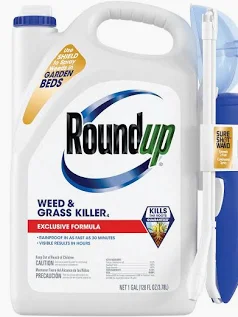 Monsanto, which Bayer purchased in 2018, asked the nation’s highest court to overturn the ruling, arguing that the Federal Insecticide, Fungicide, and Rodenticide Act (FIFRA) governing the labeling of pesticides preempts—or overrides—any state requirements and that the court should take into account how the Environmental Protection Agency (EPA) has approved labeling Roundup without a cancer warning.
In other words, Monsanto argues that because the EPA has not, under FIFRA, deemed glyphosate to be carcinogenic and has not issued a cancer warning, failure-to-warn lawsuits allowed under state law are preempted by federal law.
If Monsanto wins the case, thousands of pending lawsuits could be dismissed; if it loses, the company could face significant liability.
Roundup and cancer
Public health regulators worldwide have found that glyphosate does not cause cancer in humans. The EPA has repeatedly affirmed its finding that glyphosate is not carcinogenic when used as directed, but in 2015, a working group of the International Agency for Research on Cancer classified glyphosate as an agent that was “probably carcinogenic to humans,” based on what Monsanto’s petition called “limited evidence.”
The cancer finding of the international agency, which is part of the World Health Organization, was rejected by the European Chemicals Agency, European Food Safety Authority, and the national health authorities of New Zealand, Germany, Canada, and Australia, according to the petition.
During oral argument on April 27 in the highly technical case, Monsanto attorney Paul Clement said that the federal statute blocks failure-to-warn lawsuits like Durnell’s from advancing in court.
“A Missouri jury imposed a cancer warning requirement that EPA does not require,” he said. That added requirement is preempted by federal law, the lawyer said.
Congress wanted uniformity when it came to labels on chemicals, and ignoring Congress’s directives would “open the door for crippling liability and undermine the interests of farmers who depend on federally registered pesticides for their livelihood,” Clement said.
Justice Neil Gorsuch asked Clement why lawsuits in state courts would be at odds with federal regulations.
“If, just supposing, that EPA can bring a claim against you for misbranding and seek criminal and civil penalties despite a properly registered item, how would it be inconsistent with FIFRA to allow state tort suits to do the same thing?” the justice said.
The Supreme Court is expected to issue a ruling on the case by the end of June.
By Matthew Vadum | The Epoch Times
Jeff Louderback contributed to this report.
This is a developing story and will be updated.