
Mormon Church Growth Spurs Third Missouri Temple
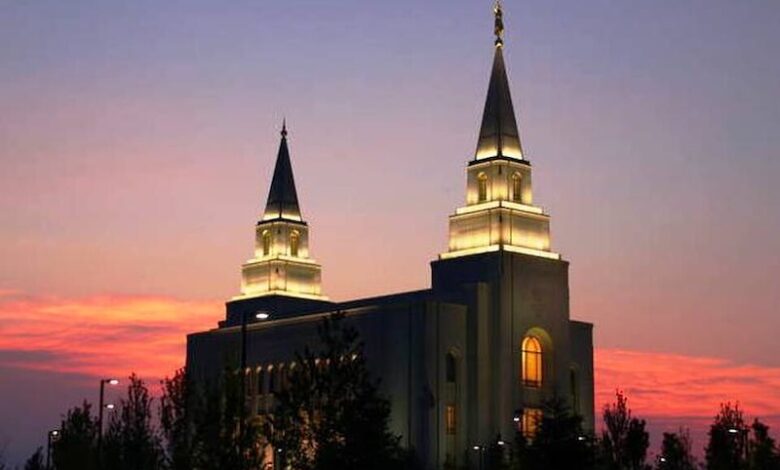
Mormonism’s growth in Missouri is outpacing Baptists, Methodists and the Assemblies of God. Now, the Church of Jesus Christ of Latter-day Saints has chosen Springfield for its third “temple” in the state.
A groundbreaking ceremony for the Springfield complex is planned for June 6. Elder Aroldo B. Cavalcante, a General Authority Seventy and member of the church’s United States Southeast Area Presidency, will preside.
This year marks just the 50th anniversary of the signing of an order that officially ended Missouri’s official policy to kill or expel Mormons.
Today, more than 84,000 Latter-day Saints live in Missouri and meet in around 180 congregations according to “The Deseret News” in Salt Lake City. Late church President Russell M. Nelson announced the Springfield Temple during the April 2023 general conference. There are only two other temples in the Show-Me-State: One in St. Louis, dedicated in 1997, and one in Kansas City, which was dedicated in 2012.
When Missouri “exterminated” Mormons
Missouri has a long and sad history with Mormonism. From 1831 to 1838, thousands of Latter-day Saints worked to “build up the land of Zion” in the state, according to the church’s overview of the Missouri historic sites.
The church broke ground for a Missouri temple in Far West, Missouri, in the summer of 1838. That may have led to an official policy of the Missouri government to murder or expel them.
In 1938, Democrat Governor Lilburn W. Boggs issued Executive Order 44, which officially declared that members of the religious movement must be “treated as enemies,” and “exterminated or driven from the state.”
In perhaps the state’s darkest moment, the Missouri state militia acted against the Mormon settlers in a bloody attack known as the Haun’s Mill Massacre. Up to 250 militiamen, joined by vigilantes, stormed the village and murdered 17 Mormon followers, including women and children. Many others were seriously wounded. Despite eye-witness accounts, no prosecutions were pursued, which fueled the expulsion of Mormons from the state.
Consequently, the temple was never constructed. Missouri’s extermination order was finally rescinded in 1976 by Republican Governor Kit Bond.
While Protestants and Mormons disagree on core Christian doctrines, including the nature of God, the authority of Scripture, and salvation by grace, the two groups have chosen cooperation on pro-life advocacy and religious freedom issues.
–Dwight Widaman