

America’s ‘Most Stressed’ Generation Turns to Prayer
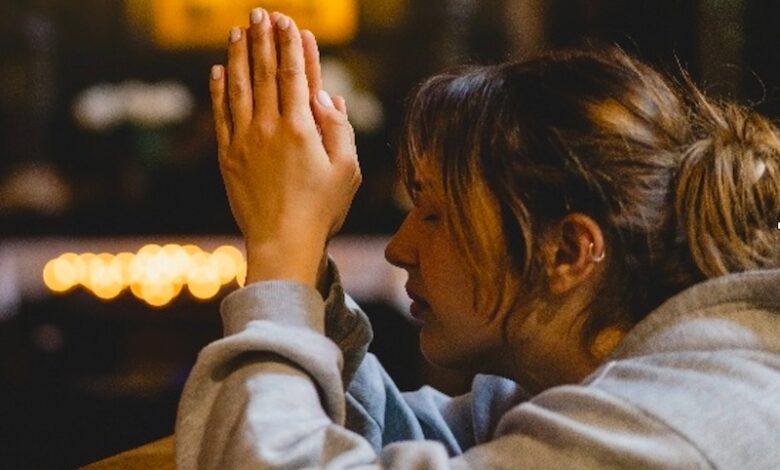
The anxiety is constant. The noise never stops. And for a growing number of young Americans, the answer isn’t found in another app, algorithm, or therapy trend—but in something far older.
They’re praying.
Across college campuses and city streets, in quiet rooms and crowded churches, members of Generation Z—often labeled the most anxious generation in modern history—are turning toward faith in search of what many describe as “real hope.”
Organizers behind a coast-to-coast initiative known as Prayer at the Heart say the shift is unmistakable. Launched at Easter and spanning all 50 states, the multi-denominational movement is calling one million Americans to pray for what it describes as a national awakening of faith and hope.
The effort comes at a time when surveys show nearly 40 percent of young people feel stressed or anxious “all or most of the time,” a reality that has shaped how many in this generation view the world—and their place in it.
“There’s a hunger among my generation for things that are real,” said Reagan Wilbanks, 27, one of the movement’s organizers.
 For Wilbanks and others, that hunger is being driven by more than just mental health concerns. It’s also a reaction to a digital world many say feels artificial, overwhelming, and isolating.
“My generation is pushing back against things that are fake, quickly generated, and automated,” he said. “There’s a desire for real community and belonging—for smaller, more personal connections rather than big brands.”
That search appears to be leading many back to church.
Recent data suggests a renewed interest in Christianity among Gen Z, particularly on college campuses. A Barna poll found that 52 percent of U.S. teenagers say they are “very motivated” to learn more about Jesus Christ—an indicator that faith, once seen as declining among younger Americans, may be finding new life.
Baptist, Assembly of God and non-denominational churches are noticing increasing interest among young people.
Reports from Catholic leaders point to similar trends. In Newark, New Jersey, more than 1,700 new converts recently entered the Catholic Church. Universities such as Notre Dame and Arizona State have also reported increases in students exploring or embracing the Christian faith.
Church leaders on all sides say the shift reflects something deeper than a passing trend.
“There’s a hunger for truth,” said Robert Barron, a Catholic bishop who has spoken widely about the resurgence. He and others point to a growing disillusionment with secularism and atheism, particularly as questions surrounding artificial intelligence, job stability, and long-term purpose intensify.
For many young adults, those uncertainties are personal.
Wilbanks said concerns about AI, economic instability, and fractured relationships are creating a longing for something more grounded—something enduring.
“We’re looking for something with roots—stability and longevity—especially given the pace of change,” he said. “We’re looking for a home.”
That search, he believes, often begins in stillness.
“A relationship with God—whether you call it religion or faith—is where you begin to find meaning,” Wilbanks said. “Prayer helps people breathe deeply and connect with God.”
Leaders behind the national prayer movement describe the current moment in urgent terms, warning that the country may be nearing a cultural and spiritual tipping point. Their response is simple, but deliberate: prayer in public spaces, in communities, and in daily life.
Whether that movement will reshape the broader culture remains to be seen. But in a generation defined by stress, uncertainty, and digital saturation, one thing is becoming clear:
For a growing number of young Americans, faith is no longer a relic of the past.
It’s becoming a way forward.
–Dwight Widaman | Metro Voice