
Vacation Bible School Remains Key Church Outreach

If you grew up in church in the United States, chances are you have been involved in Vacation Bible School (VBS) in some way, whether you attended as a kid, volunteered, or took your own children. VBS programs in their earliest forms have been around for over a century, serving thousands of children every year. For many churches, VBS is one of their biggest outreach opportunities, bringing in families from all over the community.
From Summer Lessons to Church Tradition
Summer Bible education for kids is not a new concept. The earliest forms date back to 1866 in Boston with C. B. Eavey, an education professor at Wheaton University. VBS as it’s known today emerged a few decades later, developing mostly around the East Coast in the 1870s to 1890s.
According to a book on the history of Christian Education by Arlo Ayres Brown, “These summer programs…reportedly lasted five weeks and included not only Bible content but also worship, music, open-air games, ‘expressional activities’ like sewing, weaving, basketry and hammock-making, plus talks on patriotism and hygiene.”
The concept of summer Bible schools spread to the Midwest and West in the early 20th century. By 1922, there were about 5,000 five-week-long summer Bible schools established across the U.S. A year later, the first standard VBS curriculum was created. The 1950s saw approximately 60,000 VBS programs with a combined total of about 500,000 volunteers, serving around 5 million students nationwide.
Memories of VBS Across Generations
In the 1950s, many churches also hosted something called “Weekday Church School,” where elementary school students could leave school for an hour and attend a nearby church.
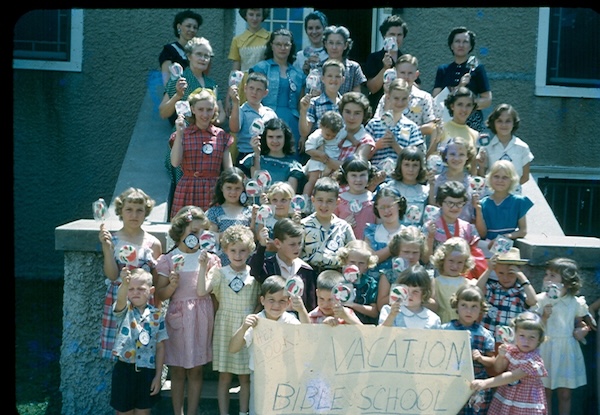
David Cobb, Kansas City, Kansas resident and Metro Voice News reader, shared his experience with Weekday Church School. His mother was the secretary of a church in KCK, where she was in charge of the program.
“This was probably in the late ’40s, early ’50s,” Cobb recalls. “Some of the students would go to the Catholic Church for their catechisms…Others would go to Protestant churches and have a program very similar to Vacation Bible School, except it was during the school day.”
Cobb also grew up attending VBS himself from the mid-1950s to mid-1960s. He remembers learning Bible stories, having time to play and eating a snack, a very similar structure to today. All of his children attended VBS in the 1980s and 1990s, which allowed Cobb to see the ways VBS programs have changed over the years.
The biggest changes he notes are technological advancements and safety concerns. Cobb recalls learning Bible stories from flannelgraph, an early tool similar to Velcro, in contrast to the heavy reliance on screens in VBS today. He also shares how loose safety used to be. “Then, any person in the church could volunteer and be at VBS and do anything. By the time my kids got there, it was a little bit more structured, and nowadays, you’ve got to almost get fingerprinted in order to work with kids.”
Why VBS Is Changing
The number of churches offering VBS peaked in the 1990s, with a 2013 Barna report estimating that 80% of churches in the U.S. had a program in 1997. In the 2000s and 2010s, the country saw a slight decline in VBS. The Barna study indicated that approximately 68% of churches offered VBS in 2012. As of 2025, that number was 64%, according to a survey conducted by Concordia Supply.
Some practical reasons for the decline include the growing financial cost, the time commitment required, other church programs taking precedence, and churches already offering other kids’ programs. An increasingly secular society has also led to less interest from families and children and a general decrease in church attendance.
There are also many factors that indicate what kinds of churches are most likely to host VBS. Statistics from the Barna study also show that Baptist churches are the most likely denomination to offer a VBS program, especially those located in the South. Nearly three-fourths of churches in the American South had VBS in 2012.
The size of the church also plays a role. Churches with a congregation of 250 or more and an annual budget of at least $500,000 statistically host summer programs more than smaller ones.
How Kansas City Churches Keep VBS Alive
While larger churches are more likely to have VBS, that’s not to say that smaller churches don’t. Many local churches across the KC Metro engage with the community to bring kids into the program.
“Last year…about half of our kids were from the community, which I think shows a great need,” says Brook Gray, Children’s and Youth Director at Echo Church in Pleasant Hill, Mo. She shares that the church advertises to the community through a sign, social media posts and personal invitations.
Gray says that VBS is a memorable experience among her church’s community. “I’ve heard so many people say it’s their favorite week of the year,” she says. “Families love to serve together. So as soon as their kids are old enough to serve, mom, dad, kids, everyone tries to serve, which is beautiful to see.”
This year, Echo Church’s VBS theme is What’s Cooking? and will run June 10-12.
Another Cass County church, Hickory Grove Baptist, is small but continues to host VBS despite lower attendance. Nancy Miller, the Assistant Director of VBS, says the church has offered VBS “as far back as she can remember.”
Miller describes the outreach they do to bring kids from the community to their VBS, including a booth at the farmer’s market and giveaways of books and Bibles. “They basically just enter for a chance to win, and then we’ll just follow that up by sending them a flyer about VBS.”
Hickory Grove Baptist’s VBS theme is Emerald Crossing, which focuses on Psalm 23.
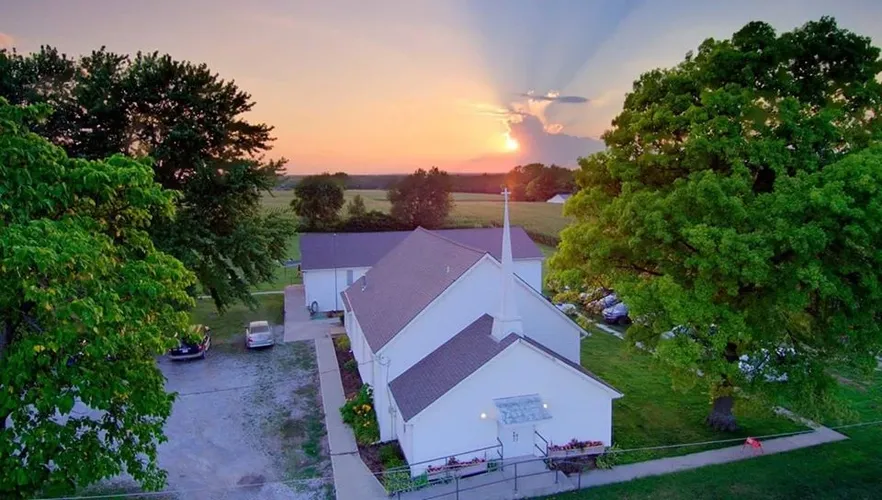
Tricia Davenport, Director of Children’s Ministry at Colonial Presbyterian Church in South Kansas City, offers the perspective of a larger church. The church has a congregation of around 200 to 300, and their attendance is typically between 80 and 100 kids.
While Davenport has only been on staff at the church since January of this year, she shares some insight on the number of unchurched families attending VBS this summer.
“Maybe 10 families say that they don’t have a church home,” she says. That number may be small, but even 10 new families attending a church shows the positive impact of VBS programs.
This summer, Colonial is combining with their other campus in Overland Park for a joint VBS, with the theme of Rainforest Falls, all about the wonder of God’s creation.
Why VBS Still Matters
Vacation Bible School has gone through many eras and evolutions, from all-day affairs that lasted nearly half the summer to shorter, fast-paced events with unique themes. Across Kansas City and beyond, VBS remains a key program in churches of all sizes. It serves as outreach, building community with families and inviting them to the church, and as a way to introduce children to the gospel message in an engaging and accessible setting.
–Lyra Thompson | Metro Voice
#VacationBibleSchool #VBS #ChurchOutreach #ChildrensMinistry #KansasCityChurches #FaithAndFamily #SummerMinistry #CommunityOutreach #BibleSchool #ChristianEducation