
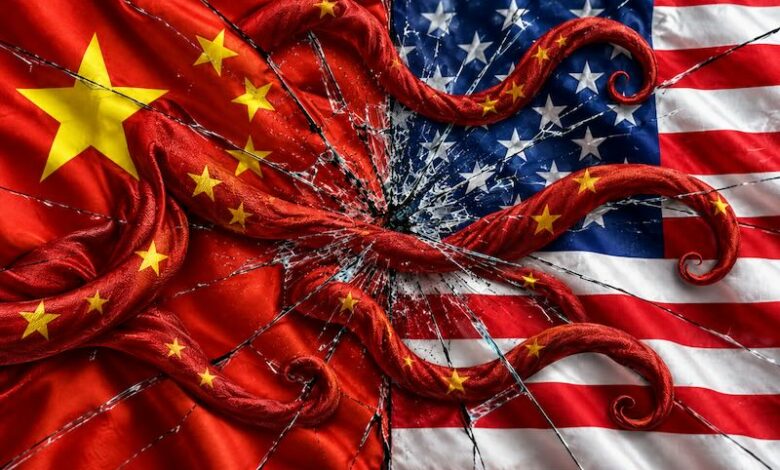
China is extending its campaign against religious believers and political dissidents into the United States, using covert operatives and surveillance technology to infiltrate U.S. churches and other houses of worship. The intimidation puts pressure on relatives who remain in China, according to federal prosecutors, technology companies and religious freedom advocates.
SPECIAL REPORT
The evidence is no longer limited to warnings from exile groups. A federal jury in Brooklyn convicted Lu Jianwang in May of acting as an illegal agent of China and obstructing justice. Prosecutors said Lu helped operate an undeclared Chinese police station in Manhattan’s Chinatown and assisted Chinese authorities in locating a pro-democracy activist living in California.
Lu’s co-defendant, Chen Jinping, previously pleaded guilty to conspiring to act as an agent of a foreign government. China has denied operating overseas police stations, describing the facilities as volunteer-run centers that help Chinese citizens with routine administrative matters.
The criminal case is one piece of a broader practice U.S. officials call transnational repression. Targets include Chinese Christians, Uyghur Muslims, Tibetan Buddhists, Falun Gong practitioners and democracy activists who believed they had escaped Beijing’s reach.
The issue gained new urgency ahead of Chinese President Xi Jinping’s scheduled Sept. 24 visit to Washington. Religious freedom leaders are urging President Donald Trump to make China’s activities inside the United States, along with its treatment of believers at home, a central part of his talks with Xi.
READ: China forcing churches to spout communist propaganda
Former U.S. Ambassador-at-Large for International Religious Freedom Sam Brownback said Beijing is waging “a campaign of harassment, disinformation and lawfare” against religious and political dissidents in the United States.
In a Fox News opinion column, Brownback said Falun Gong practitioners have received nearly 300 bomb and death threats. That figure comes from Falun Gong organizations and has not been independently verified by federal authorities.
The tactics have become more sophisticated.
Artificial intelligence company Anthropic reported this month that it had disrupted China-based intelligence operations that misused its Claude platform to collect information on people outside China. According to Reuters’ account of Anthropic’s findings, the targets included Uyghurs, Tibetans and Taiwanese officials.
Brownback said the surveillance also extended to Christian and Falun Gong communities, including people in the United States. Anthropic said the operations were detected and stopped while still in their early stages.
The surveillance is backed by an older and more personal pressure point. Chinese authorities have been accused of threatening or punishing relatives who remain in China, pressuring people abroad to remain silent or spy on other expatriates. The U.S. State Department’s religious freedom report on China documented reports of overseas surveillance and harassment directed at Falun Gong practitioners, Uyghur Muslims, Tibetan Buddhists and other religious minorities.
Some were pressured to report on fellow expatriates. Others said their family members in China were detained or harassed because of activism overseas.
Those concerns drew representatives of several persecuted faith communities to the Museum of the Bible in Washington on Sept. 16. The briefing, titled “CCP Oppression in America and China,” included Christians, Uyghurs, Tibetan Buddhists and Falun Gong practitioners.
Among them was Ding Shuqi, a pastor from Early Rain Covenant Church in Chengdu, China. Ding described five months in detention after Chinese authorities raided the unregistered congregation in 2018.
He said guards forced him into a painful crouching stress position known as “the dragon holding the pillar,” cut him off from his family and prohibited him from having a Bible. He was detained again in 2023.
“My story is not special,” Ding told the Washington audience, according to The Christian Post. He said Christian leaders across China wake each morning unsure whether police will come for them.
Ding said officers continue to interrupt worship services, record identification information, search homes and take church leaders away. Early Rain founding pastor Wang Yi is serving a nine-year prison sentence on charges that include inciting subversion of state power.
“The first freedom is exactly what the government is trying to crush,” Ding said of religious liberty.
China’s constitution formally guarantees freedom of religious belief, but only five religions receive official recognition: Buddhism, Catholicism, Islam, Protestantism and Taoism. Their congregations must operate through organizations supervised by the government.
Independent house churches refuse that arrangement because it gives the Chinese Communist Party authority over leadership, teaching and church operations.
China calls its religious policy “Sinicization.” In practice, Pew Research Center found, it requires religious groups to align their teachings and practices with Chinese culture, socialist values and “Xi Jinping Thought.” Authorities have removed crosses, closed unregistered churches, restricted religious instruction for children and arrested pastors.
Beijing maintains that it protects lawful religious activity while enforcing laws against extremism, separatism and organizations it considers illegal cults. Chinese officials also routinely accuse Washington of using human rights and religion to interfere in the country’s internal affairs.
Pastor Ezra Jin Mingri experienced the dividing line firsthand. Jin led Beijing’s Zion Church, one of China’s largest independent Protestant congregations, before authorities detained him.
Trump raised Jin’s imprisonment during a May meeting with Xi. China released the pastor several weeks later.
“A China without religious freedom is a China we cannot accept,” Jin said after reaching the United States. In an August interview with PBS NewsHour, he described Chinese society as totalitarian, with the Communist Party controlling nearly every institution.
Religious freedom advocates are asking Trump to use Jin’s release as a starting point, not an isolated diplomatic success. They want him to press Xi for the release of other prisoners of conscience and demand an end to operations targeting people on American soil.
The Manhattan police-station conviction demonstrated that such activity can violate U.S. foreign-agent and obstruction laws. The surveillance reports show how quickly the same campaign can move online.
For dissidents who fled China, the result is unsettling. They may live in Washington, New York or California, but the government they escaped can still watch them, contact their families and try to silence them.
The question facing Trump when Xi arrives is whether religious freedom will remain a secondary diplomatic concern or become part of the price Beijing pays for doing business with the United States.
–Metro Voice and wire services