
St. Patrick’s life more fascinating than myth
St. Patrick is famous for driving the snakes out of Ireland and using the shamrock to evangelize the Irish. Although these events probably never occurred, the man is more interesting than the myth, according to Gary McLoughlin, author of “Virtues of the Irish Saints.”
“From a purely geographical perspective, there weren’t really any snakes in Ireland,” he told “The Christian Post.“ “Its climate is too cold.”
He believes the myth, such as snakes, emerged as “a wonderful story of symbolism of Patrick banishing evil. If you were writing in the Dark Ages and Christianity had come to replace paganism, which in some of its forms was pretty dark, that’s probably what you would write about.”
READ: So What’s the deal with St. Patrick?
Patrick was born sometime in the late fourth century as a Roman citizen in occupied Great Britain. As a teenager, he was enslaved and sent to Ireland, eventually escaping at age 22 and returning home. During his captivity, which included working in harsh conditions as a shepherd, he had a spiritual awakening and, after gaining his freedom, became a priest and eventually was consecrated as a bishop at age 43.
From there, he returned to Ireland to preach the gospel. Although Christians were on the island before he arrived, Patrick is credited with converting the natives to Christianity.
“With Patrick, he did leave two writings, and he never mentions any of the myths,” McLoughlin said. “But he does mention his life, and he does mention slavery and he does mention his life as a Roman. He does talk about his trials. He talks about his struggles. This was an important part of his life. And, you know, in our world today, it just struck me that slavery is still with us, of course. There’s more slaves in the world now than there’s ever been. And there is persecution, there’s Christian persecution.”
McLoughlin believes it took courage for Patrick to return to Ireland after being enslaved.
“I think of our modern world, if someone was, say, in a North Korea or something like that and you were captured and imprisoned and God called you to go back there as a missionary, it would take an enormous amount of courage to do that,” he said. “But even just in our daily lives, it takes courage to forgive someone, it takes courage to reform broken relationships. It takes courage to do things. To me, that was the overarching virtue of his life.”
–Alan Goforth
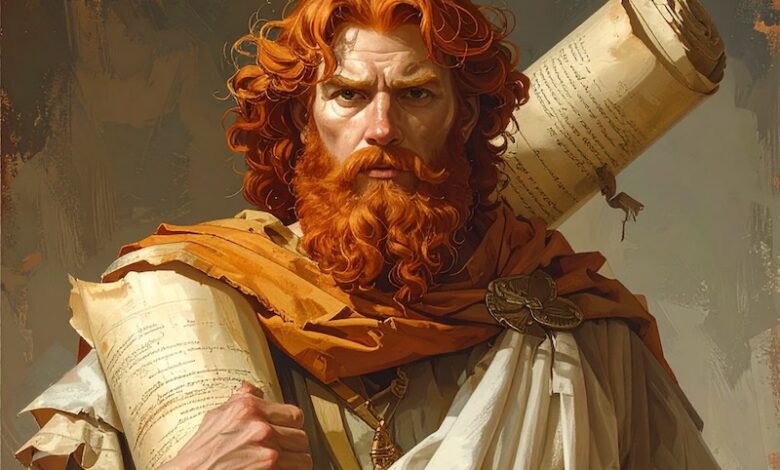
Image created by Metro Voice using AdobeAI