

America launches ‘Operation Epic Fury’ Against Iran
U.S.-Israel Strikes Kill Senior IRGC Commanders, Draw Allied Support
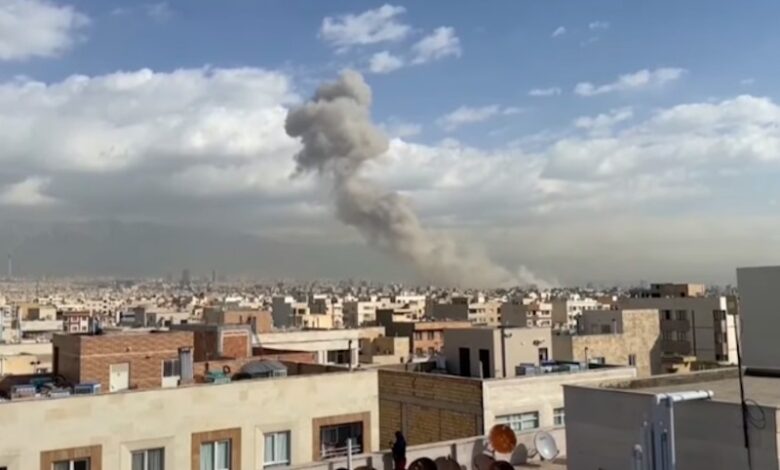
President Donald Trump announced early Saturday that the United States has begun what he called “major combat operations” against Iran, opening a sustained military campaign aimed at dismantling Tehran’s nuclear and missile capabilities and ending what he described as decades of state-sponsored terror.
The Pentagon confirmed the operation, called Operation Epic Fury, began shortly after 9 a.m. local time in Iran. Israeli forces launched parallel strikes under a coordinated campaign named Operation Roaring Lion. U.S. officials told Reuters the assault is expected to continue for several days.
In an eight-minute video posted at 2:30 a.m., Trump said the mission is intended “to defend the American people by eliminating imminent threats from the Iranian regime.” He accused Tehran of rebuilding nuclear infrastructure, advancing ballistic missile production and rejecting diplomatic openings.
WATCH first footage from “Operation Roaring Lion” as the Israeli Air Force pounds Iranian missile launchers in Western Iran. pic.twitter.com/j4EeT9hdL2
— Hananya Naftali (@HananyaNaftali) February 28, 2026
“It has always been the policy of the United States that this terrorist regime can never have a nuclear weapon,” Trump said. “It’s been mass terror, and we are not going to put up with it any longer.”
Explosions were reported across Tehran, including the Pasteur district, home to the heavily secured compound of Supreme Leader Ayatollah Ali Khamenei. Iranian state-affiliated outlets reported additional blasts in Qom, Isfahan, Kermanshah and Karaj. Iranian officials later confirmed Khamenei had been moved to what they described as a secure location.
An Iranian source close to the establishment told Reuters that several senior commanders of the Islamic Revolutionary Guard Corps and political officials were killed in the opening wave. Independent confirmation of identities was not immediately available. Israeli military officials said “essential personnel” involved in Iran’s missile and nuclear planning were targeted.
Prime Minister Benjamin Netanyahu said the operation was necessary to remove what he called an existential threat to Israel and a broader danger to the region. Israeli defense officials said months of joint planning with U.S. counterparts preceded the strike.
According to Israeli military statements, targets included missile launchers, intelligence headquarters and infrastructure linked to weapons production. Officials said degrading those assets early would blunt Iran’s ability to retaliate and reduce long-term risk to Israeli and American civilians.
Iran responded within hours.
Missiles were launched toward Israel and Gulf states that host U.S. forces. Sirens sounded across northern and central Israel, including Jerusalem and Tel Aviv, as interceptors were activated. Blasts were reported in Bahrain, home to the U.S. Navy’s Fifth Fleet, and in Qatar and the United Arab Emirates. Emirati authorities reported at least one civilian fatality in Abu Dhabi from debris following an intercepted missile.
U.S. embassies in Bahrain and Qatar ordered personnel to shelter in place. Airlines suspended flights and several countries temporarily closed airspace.
Several American and Israeli allies signaled support for the campaign, reiterating Israel’s right to defend itself and long-standing concerns over Iran’s enrichment and missile programs.
Despite the retaliation, U.S. officials said early results indicated key Iranian launch capabilities had been damaged. The strikes were designed to systematically degrade infrastructure built over decades.
Trump acknowledged the possibility of American casualties. “The lives of courageous American heroes may be lost,” he said, calling the campaign “a noble mission” aimed at preventing what he described as a radical dictatorship from threatening global security.
In the final minutes of his address, Trump spoke directly to the Iranian people and urged them to “seize control of your destiny” once operations conclude. He offered immunity to IRGC members willing to lay down their arms.
Whether Tehran escalates further remains uncertain. What is clear by Saturday morning is that Washington and Jerusalem have moved from warnings to sustained action, signaling that preventing Iran from obtaining a nuclear weapon now outweighs the risks of confrontation.
–This story was produced by our Automatic News Aggregator service to create a story from the latest breaking news.